
We do the darnedest things!, as we have been told more than once. So why stop now.
We got a wild hair, and decided we had a paver stone pad that begged for some kind of artful adornment. After scratching our heads a bit, and pondering the self-made dilemma, we decided that special something should be a sundial.
Ok, I know, now I’ve got you scratching your head, but stay with me. This sundial would not only read time via shadows, but it would be a 6′ circle made from re-bar (thank you, Pat & Leonard). So we did a bit of astrophysics to calculate the longitude / latitude for our elevation to determine proper degree of alignment for the numbers, and appropriate angle and height of the gnomon (you know, that angled piece that projects the shadows).

We built a jig made up of spaced ‘bumpers’ to cold-form the 1/2″ rebar into a perfect 6′ circle. As we bent it around, the re-bar resisted, so we had to convince it to conform to our whim with a helper bar and inch-winch, putting ‘keeper’ bumpers on the outside to contain the re-bar.

It was definitely a learning experience as the re-bar let loose a couple time. John has the bruises to add insult to injury. The 3rd time was the charm, making it easier for the inside 5’2″ rebar inner circle. By the time we bent the 2nd circle we started putting straps around the circle such that we could safely flip it to weld the opposite side, hoping for no more ‘un-furling of the re-bar’ incidents.

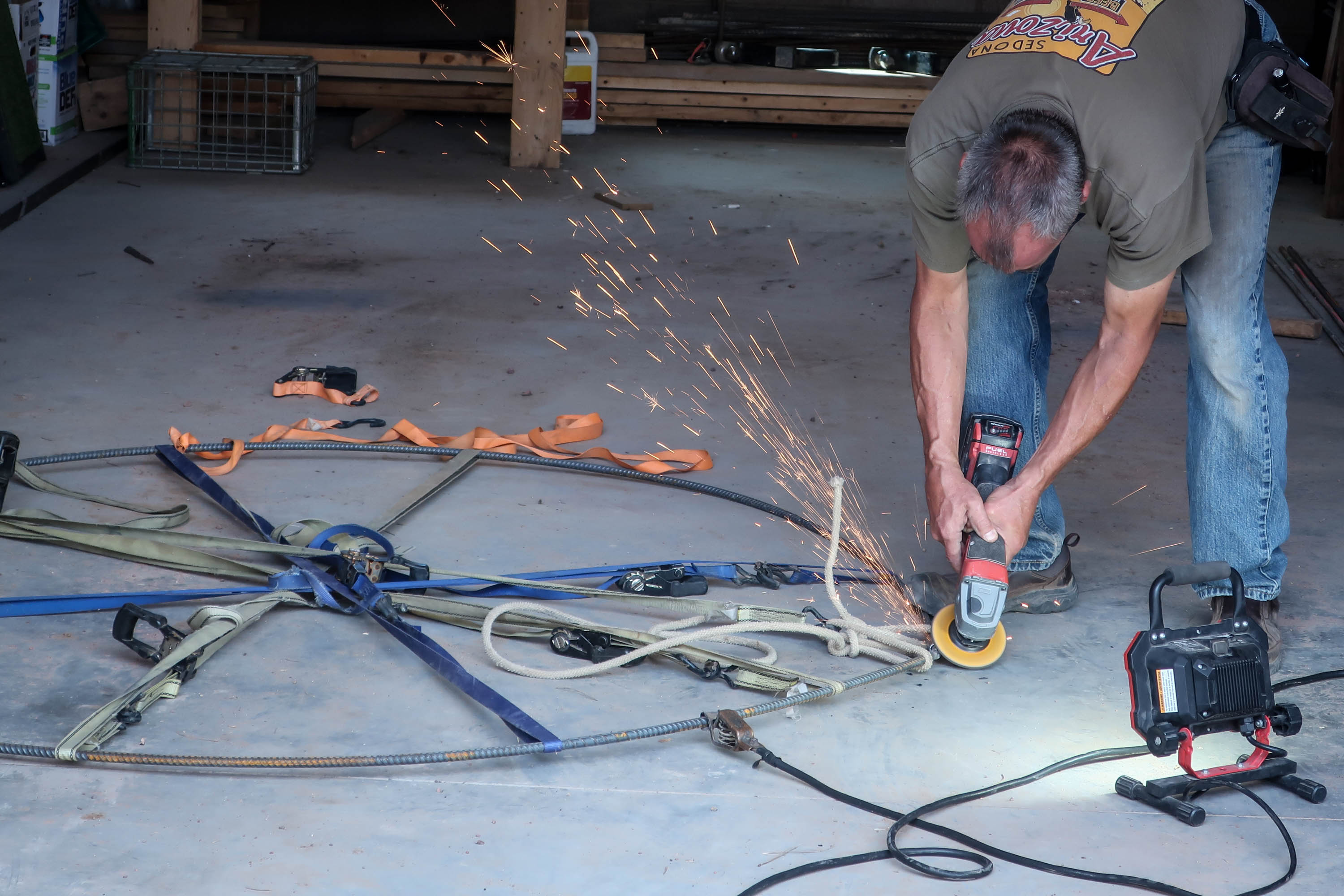
With the rings bent, welded, and ground, we were ready to undertake the roman numerals. We cut and ground the 16- I’s, and built a jig for the angled X’s and V’s.

Then welded them together, and ground them.
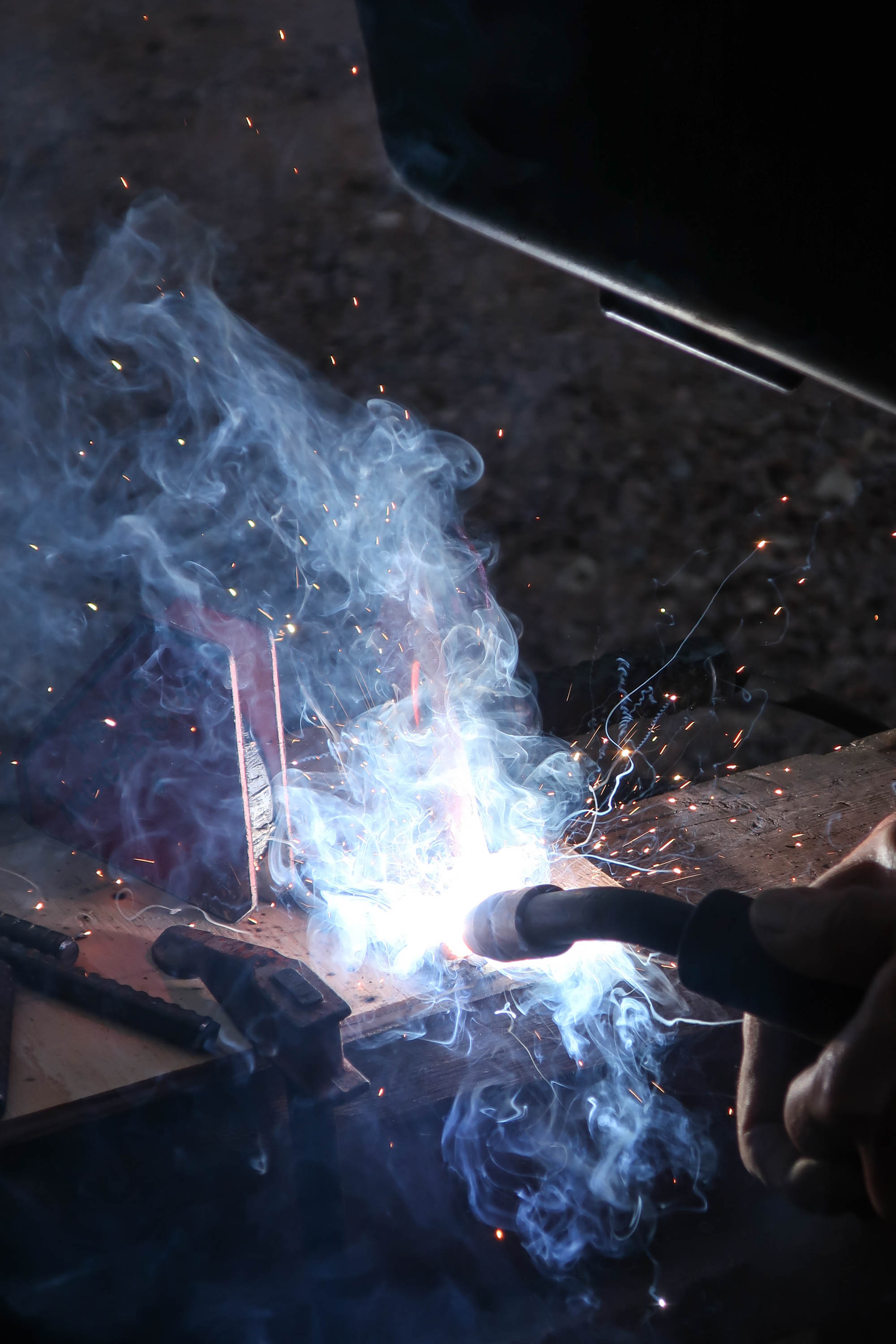

Using a protractor, a string and our calculations we measured the angles for placement of our clock face roman numerals – 11 am and 1 pm at 8.64 degrees, 10 am and 2pm at 18.13 degrees, etc. Then we individually welded our numbers into position.


For added strength we welded 5 re-bar support struts from the center to the OD of the inside ring, one of which the gnomon will mount on.

After a lot of welding and grinding, we are looking toward the embellishment phase. The clock face will be powder coated a brick red color, so to make it pop we decide to add a removable adornment at the bottom. It will be mounted on bands, adding strength to the bottom of the sundial, and tying the bottom rings together. So that it can be removed to be painted another color (black) we have to get creative on a method to remove.
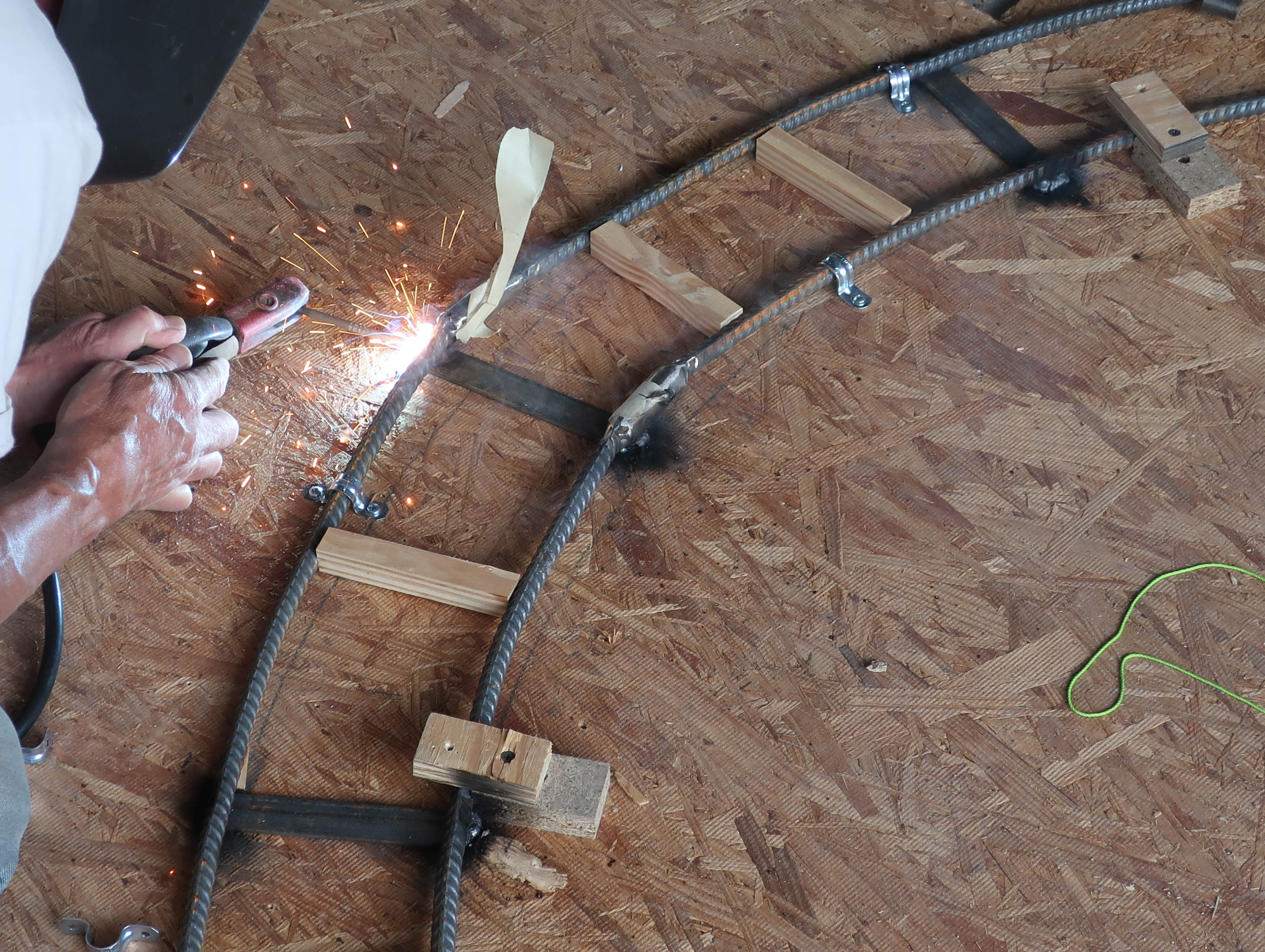
We individually cut, bent and ground 1/4″ bar stock to make letters spelling out ‘HAPPY JACK’.
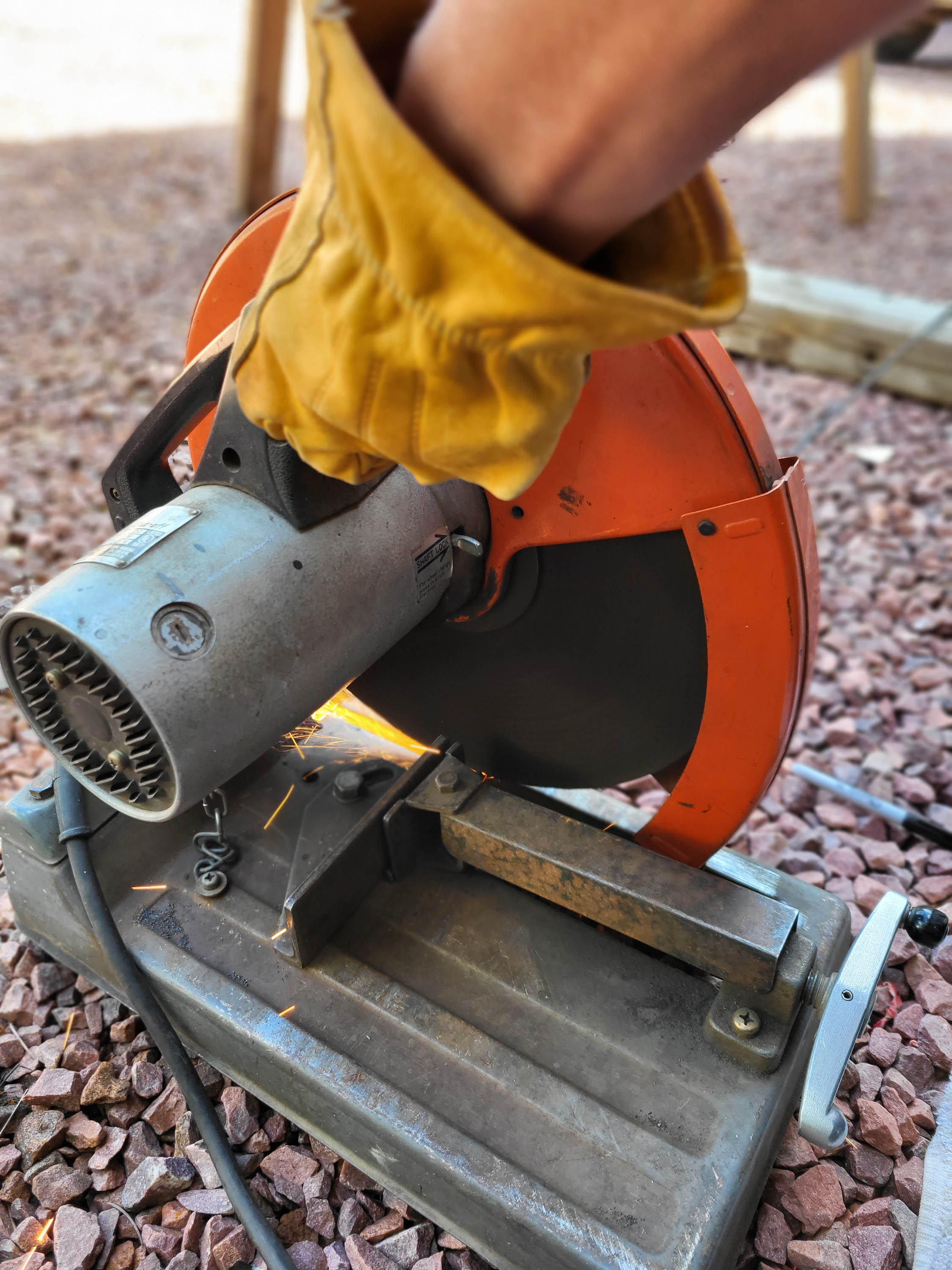
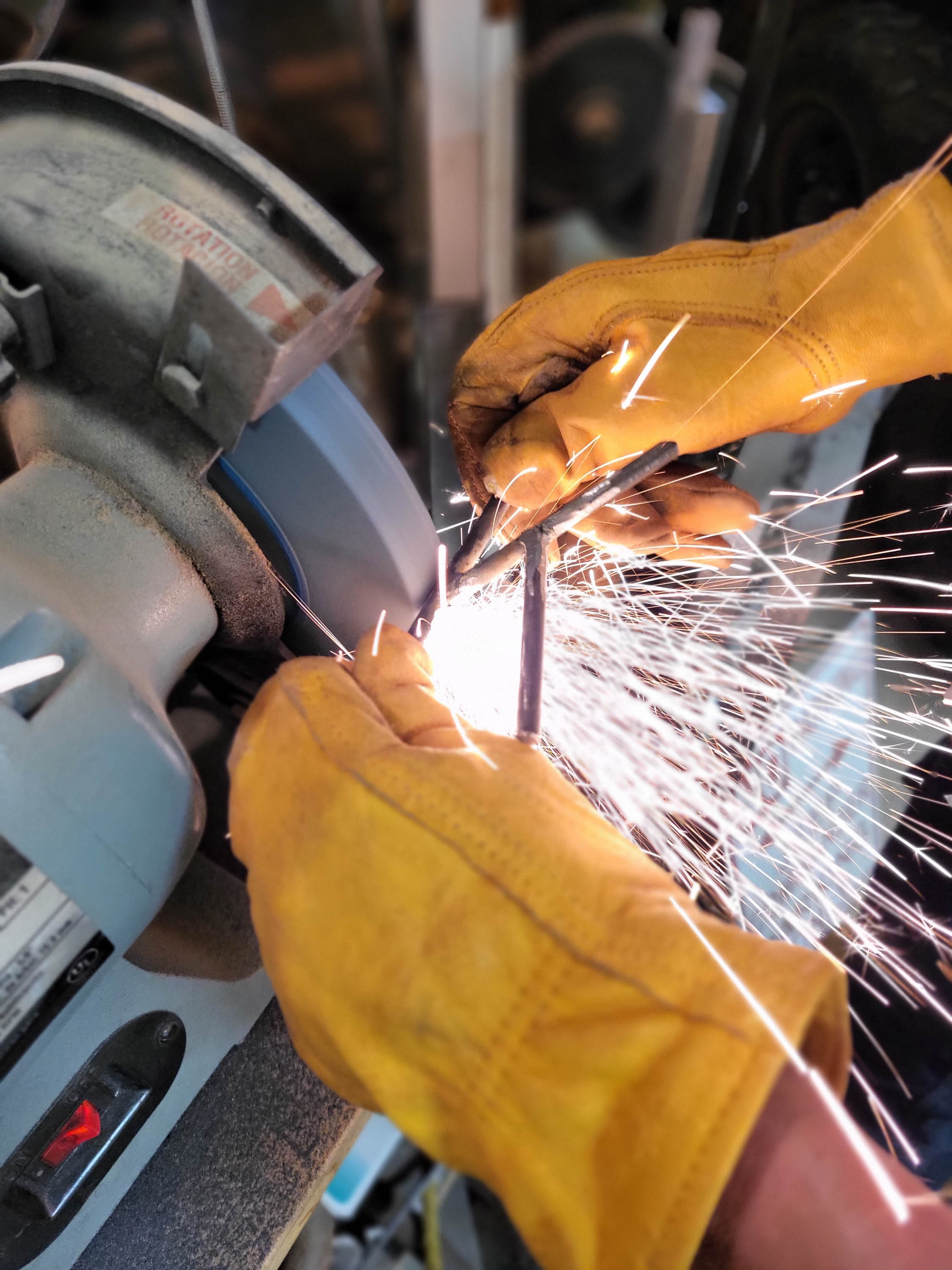
Individual letters are cut, ground and formed to shape.


To tie the letters together we attach them to a wire to hold them in place and make them removable, adding washers to bolt to the bands on the clock face.
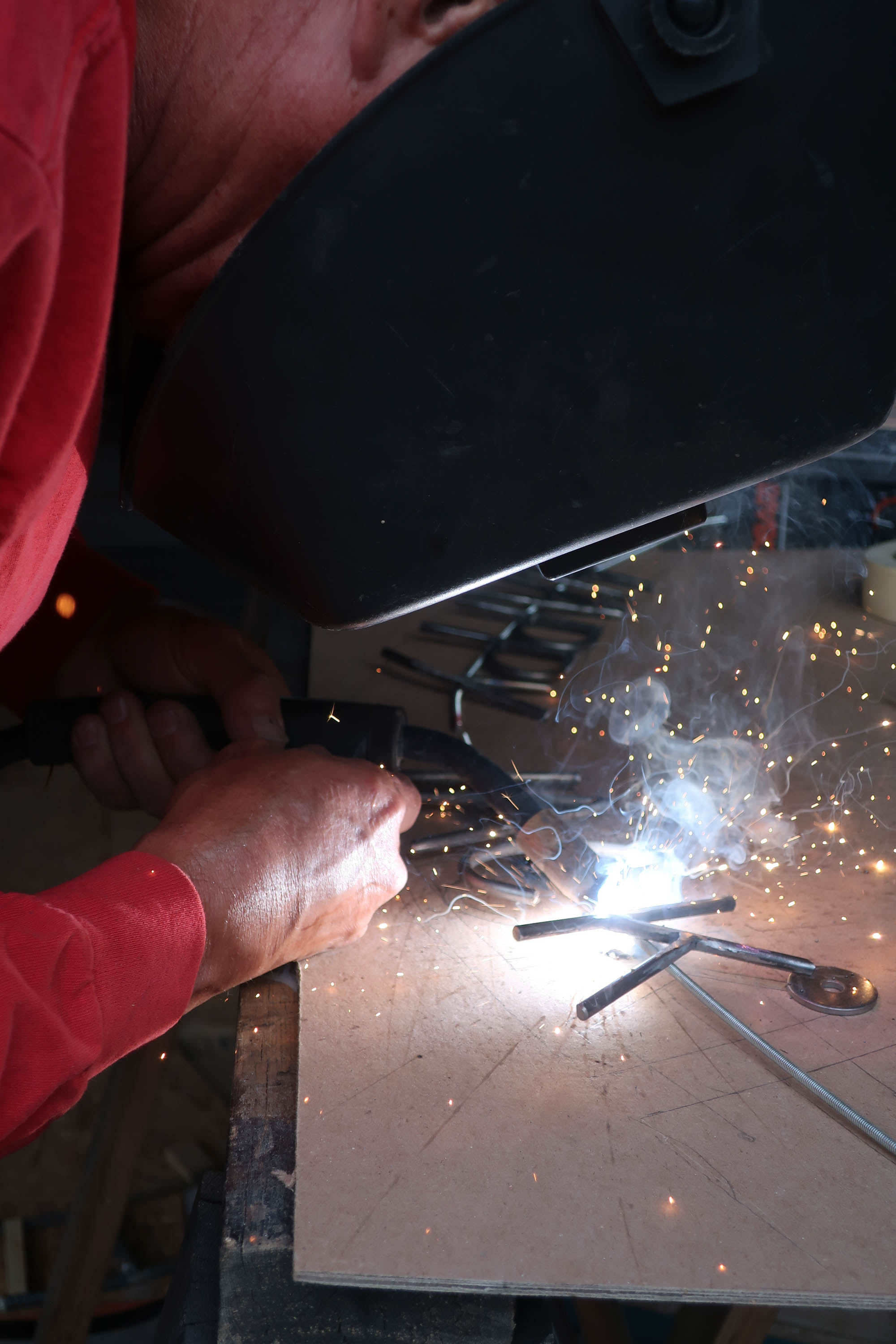
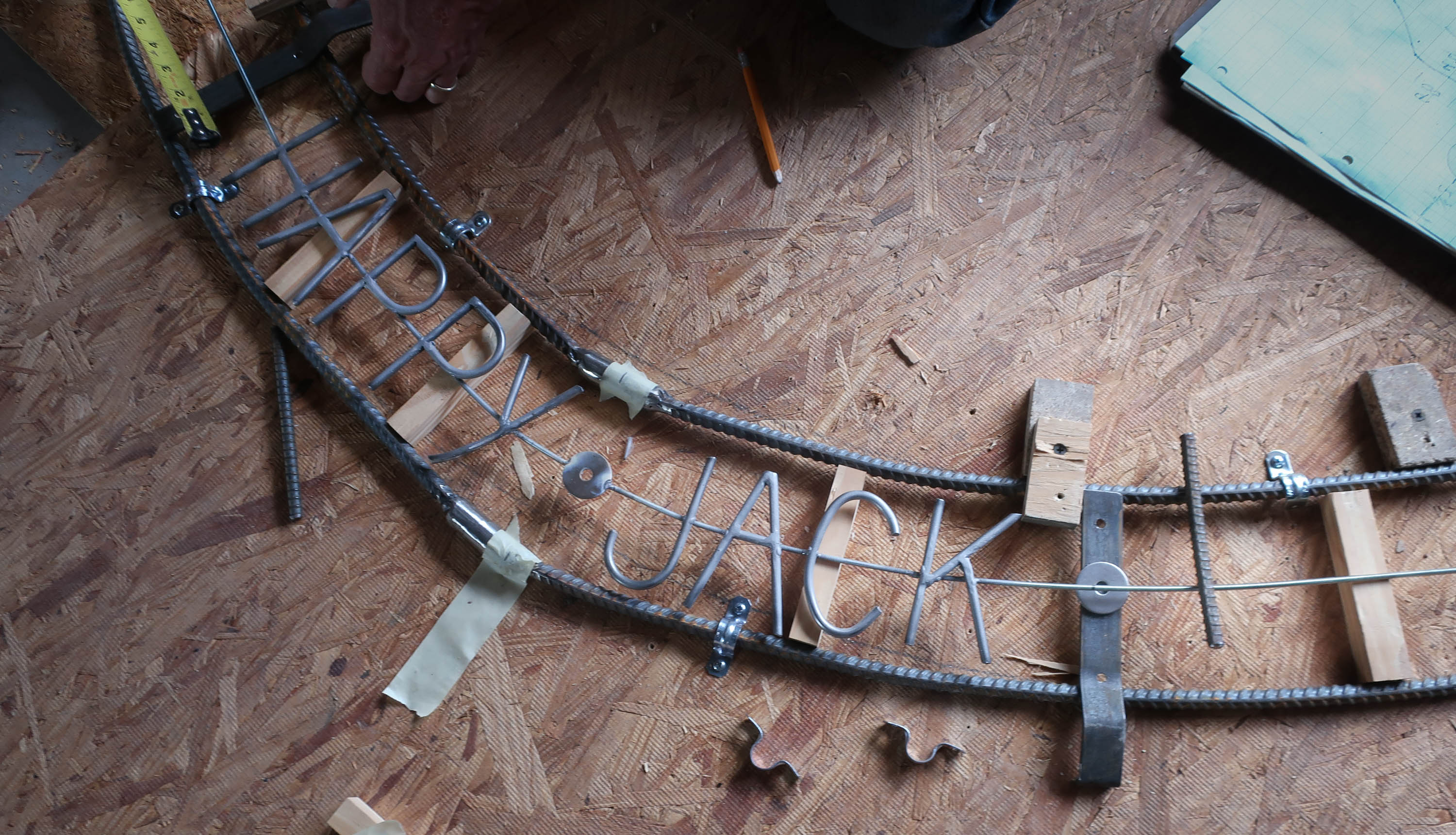
Are you staying with me? Whew! I know.
Aside from the clock itself, some of the most pondering came from trying to figure out how to make the HAPPY JACK and gnomon removable, and seamlessly elegant without clap trap.
Finally we get to the gnomon part and speeding that process along, we cut the gnomon with a plasma cutter and weld it to re-bar, attaching metal tabs to the clock face and bottom of the gnomon.

And wa-la, a conversation piece is born.

We had it powder coated at Arizona Powdercoat (on Washington / 202 in Phoenix), who have always done a fabulous job for us, and it pops… and tells time, in it’s own artful ancient way.
For a high level history of the sundial check out my post here … https://wordpress.com/post/kritterspix.com/4441









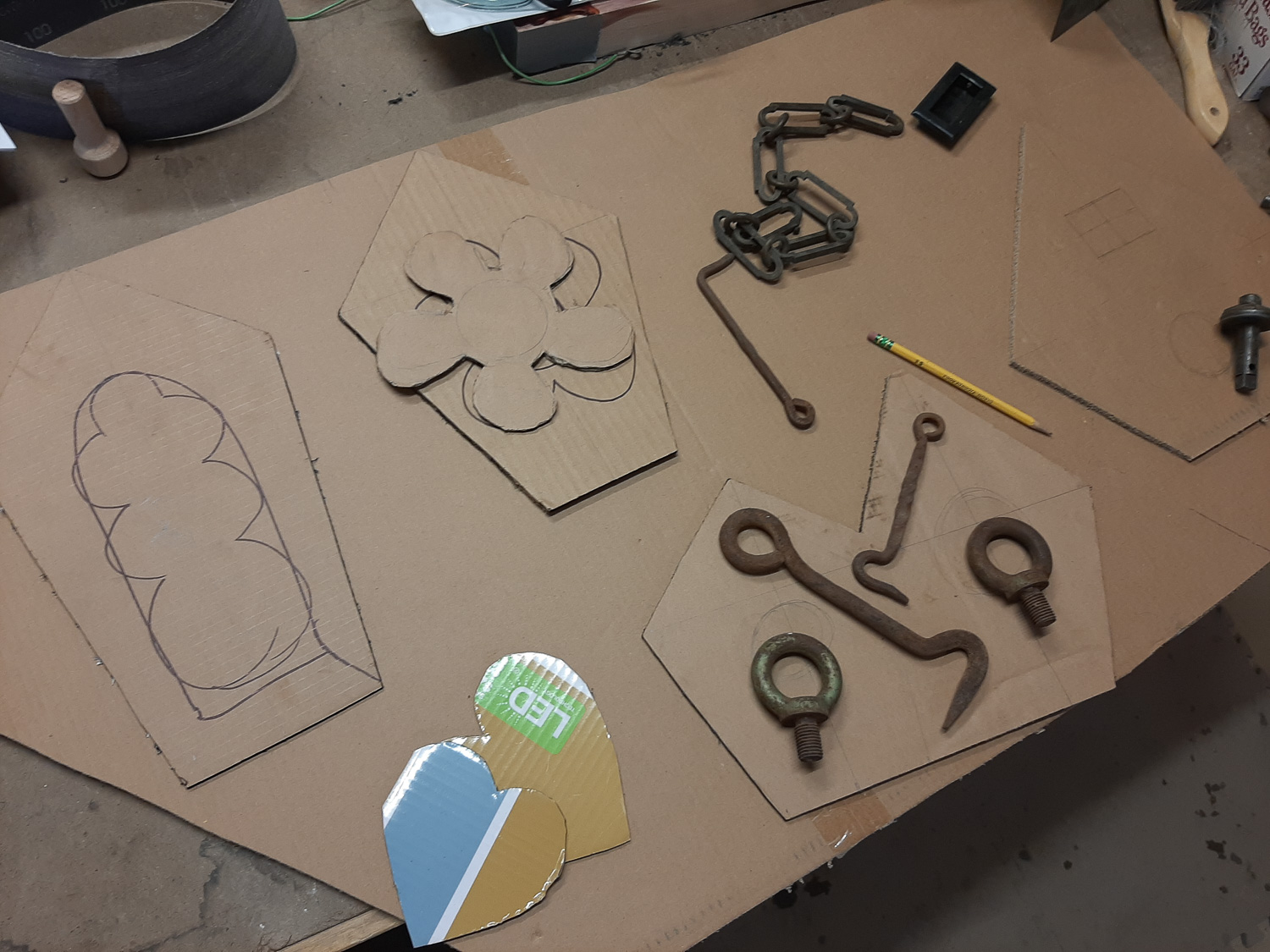 Layout
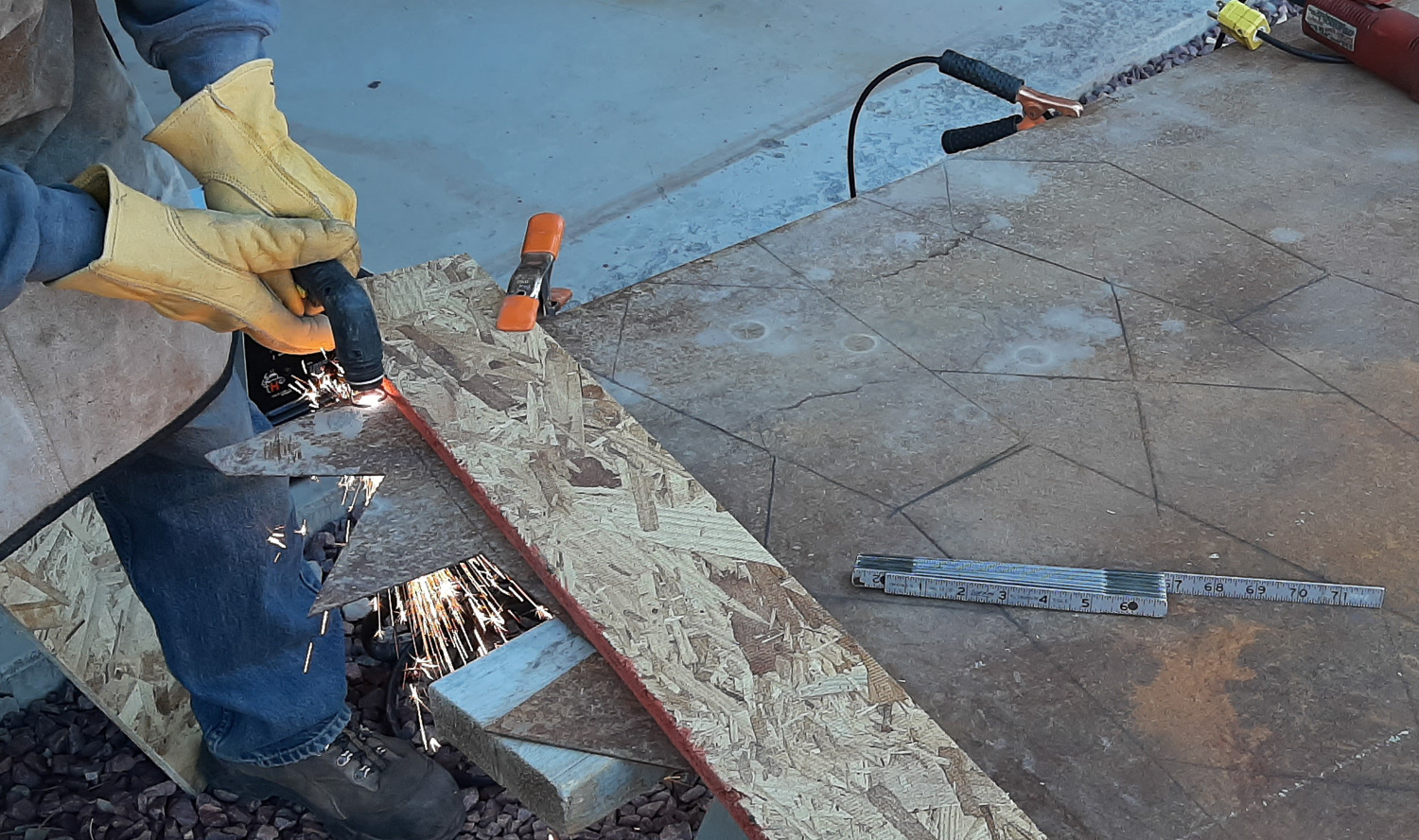 Plasma cutting metal
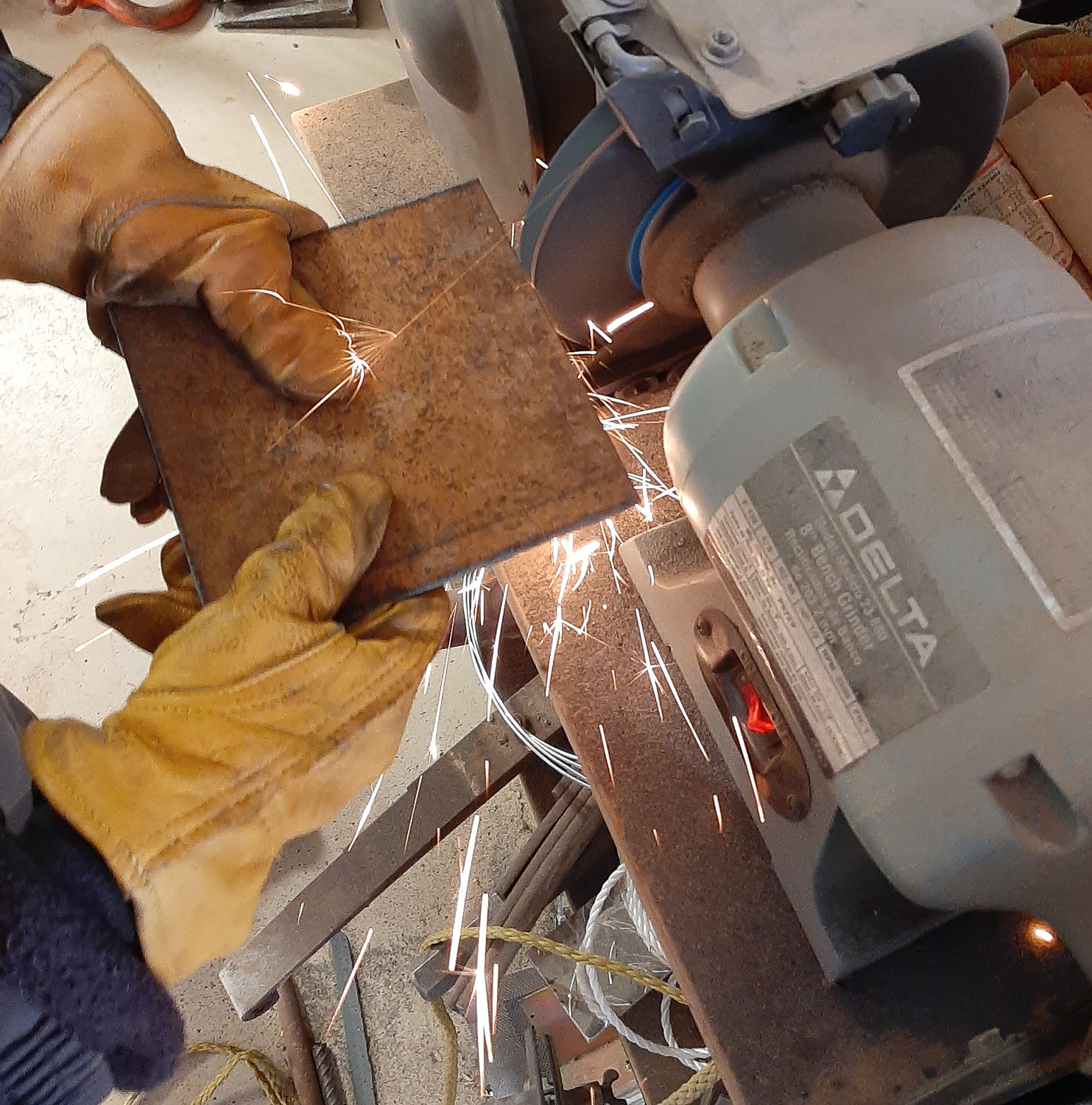 Bench grinding sides
 Angle grinding fronts
 Braising on ‘shutters’ from antique chain link
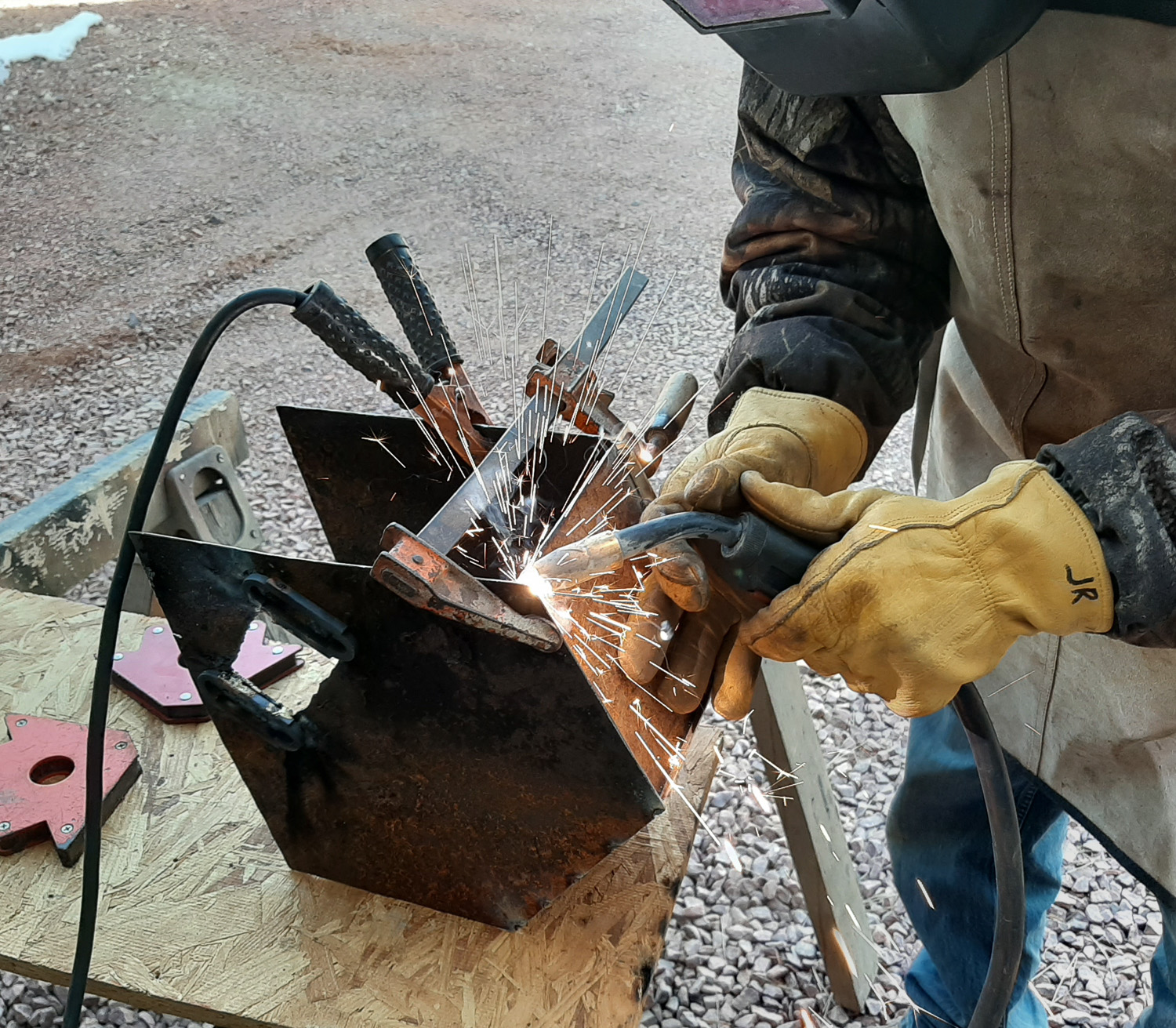 Arc-welding panels
 Finish birdhouse – full of character and rustic charm
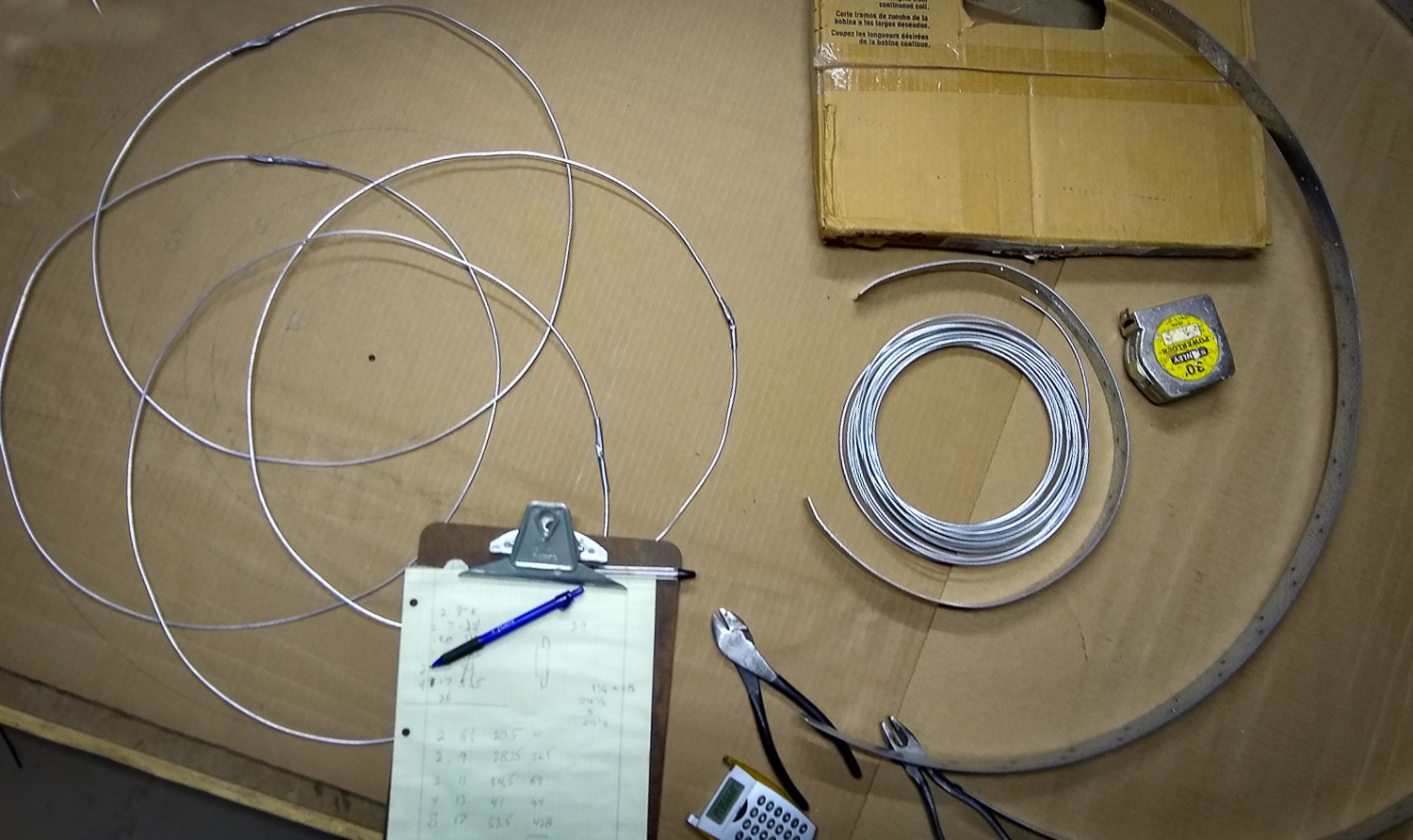 Initial Layout
  Cutting strapping material for circles (rings)
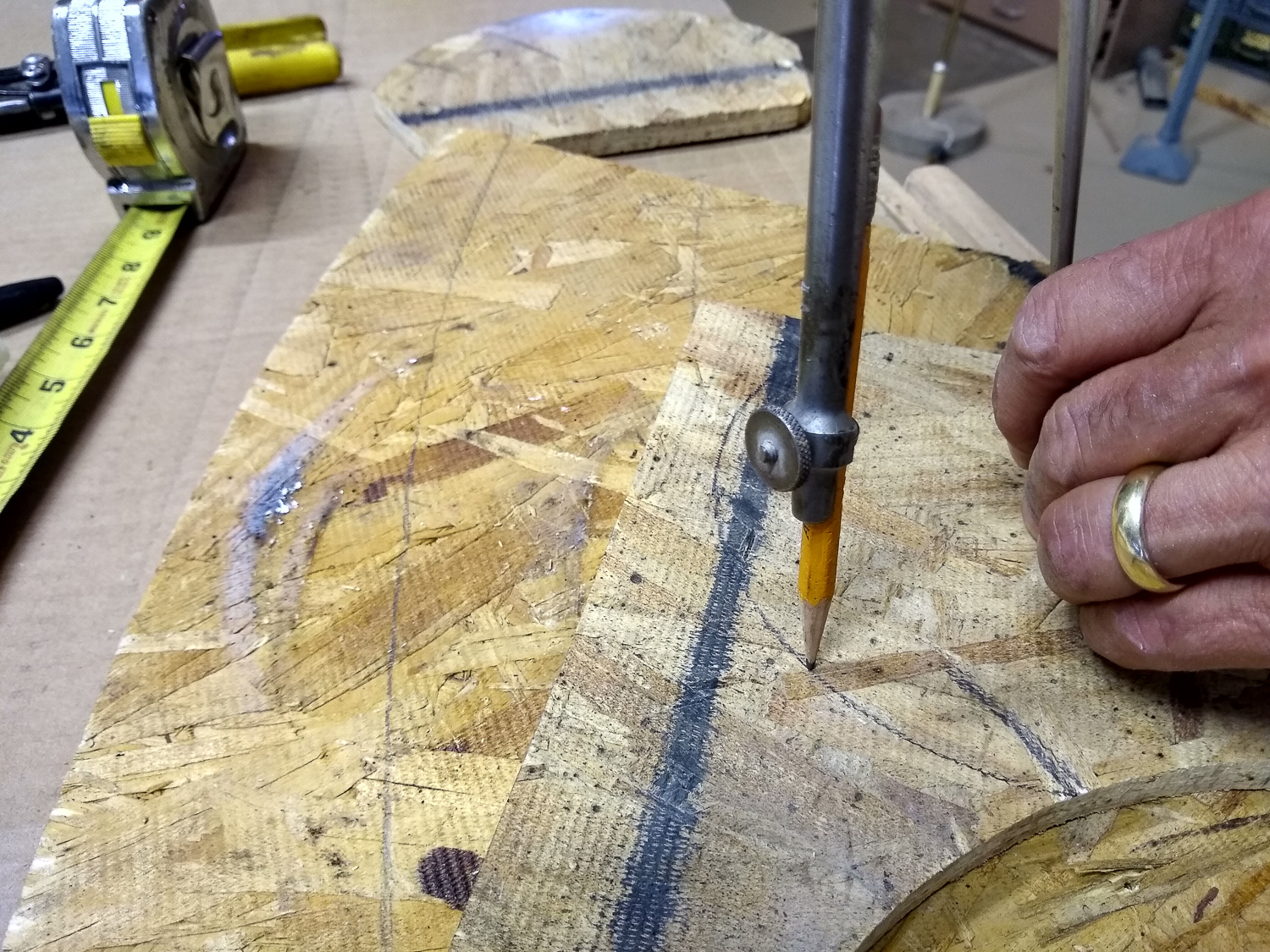 Preparing jig to weld rings
 Cutting jig template on bandsaw
 Ring set up in jig, ready to weld
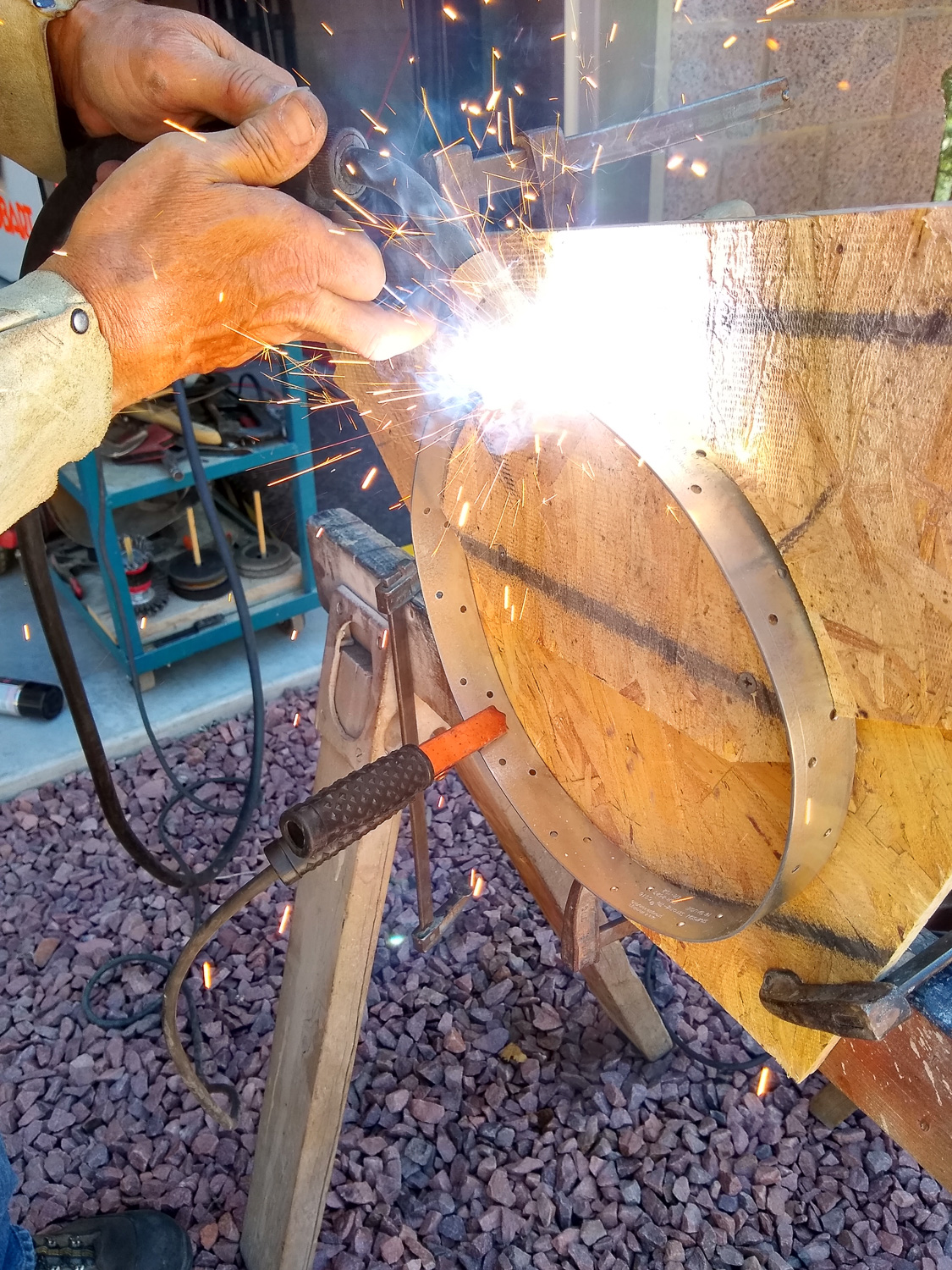 Welding one of many rings
 Grinding one of many rings
 Grinding steel pin connectors
 Mock up of ring assembly
 Welding rings together into subassembly
 Welding ring assembly
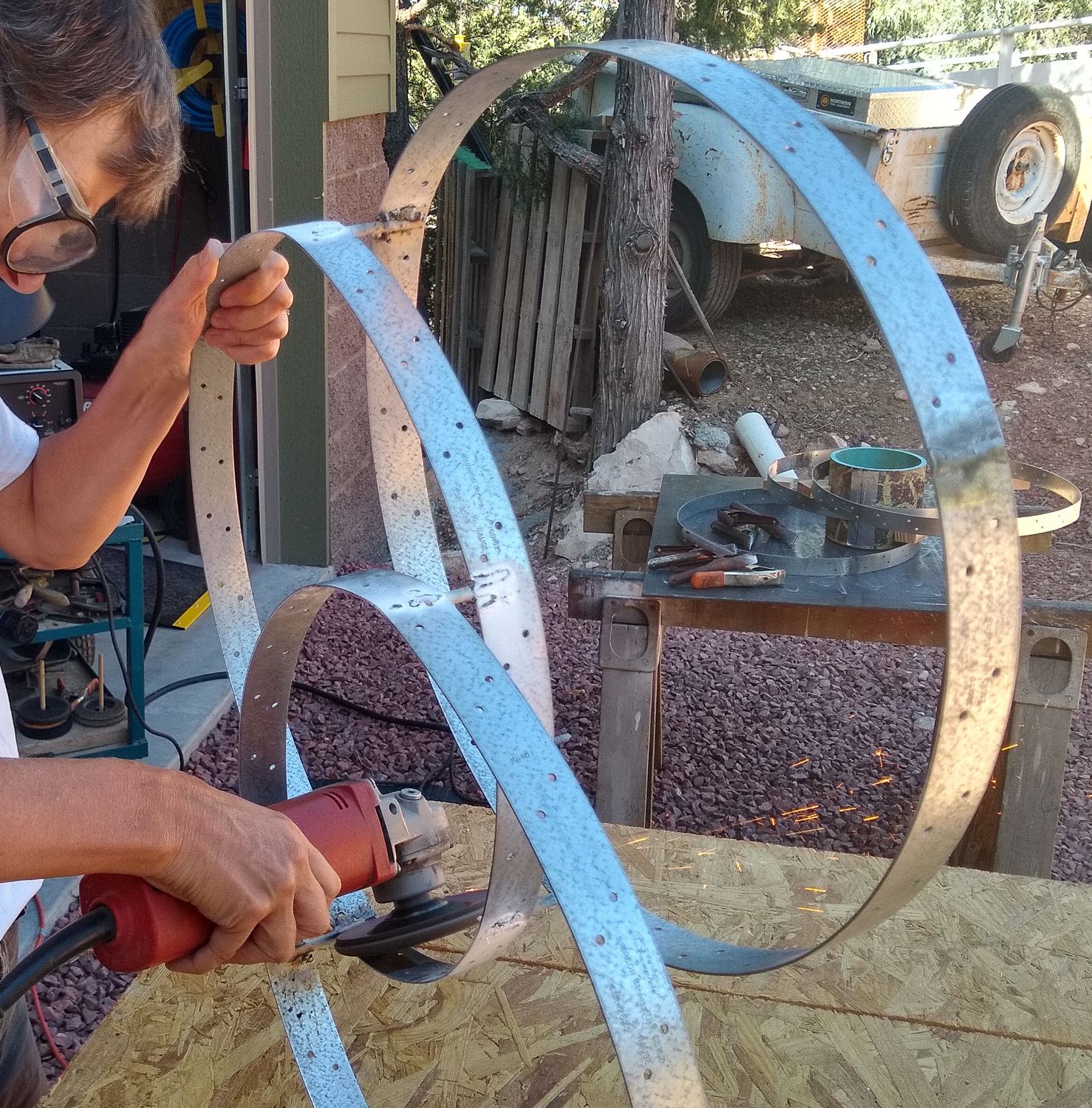 Grinding ring assembly
 Spraying spray tack on inner tube
 Spraying textured art paper to coat tube
 Applying paper to tube and trimming
 Painting interior of chandelier ‘shade’
 The big reveal


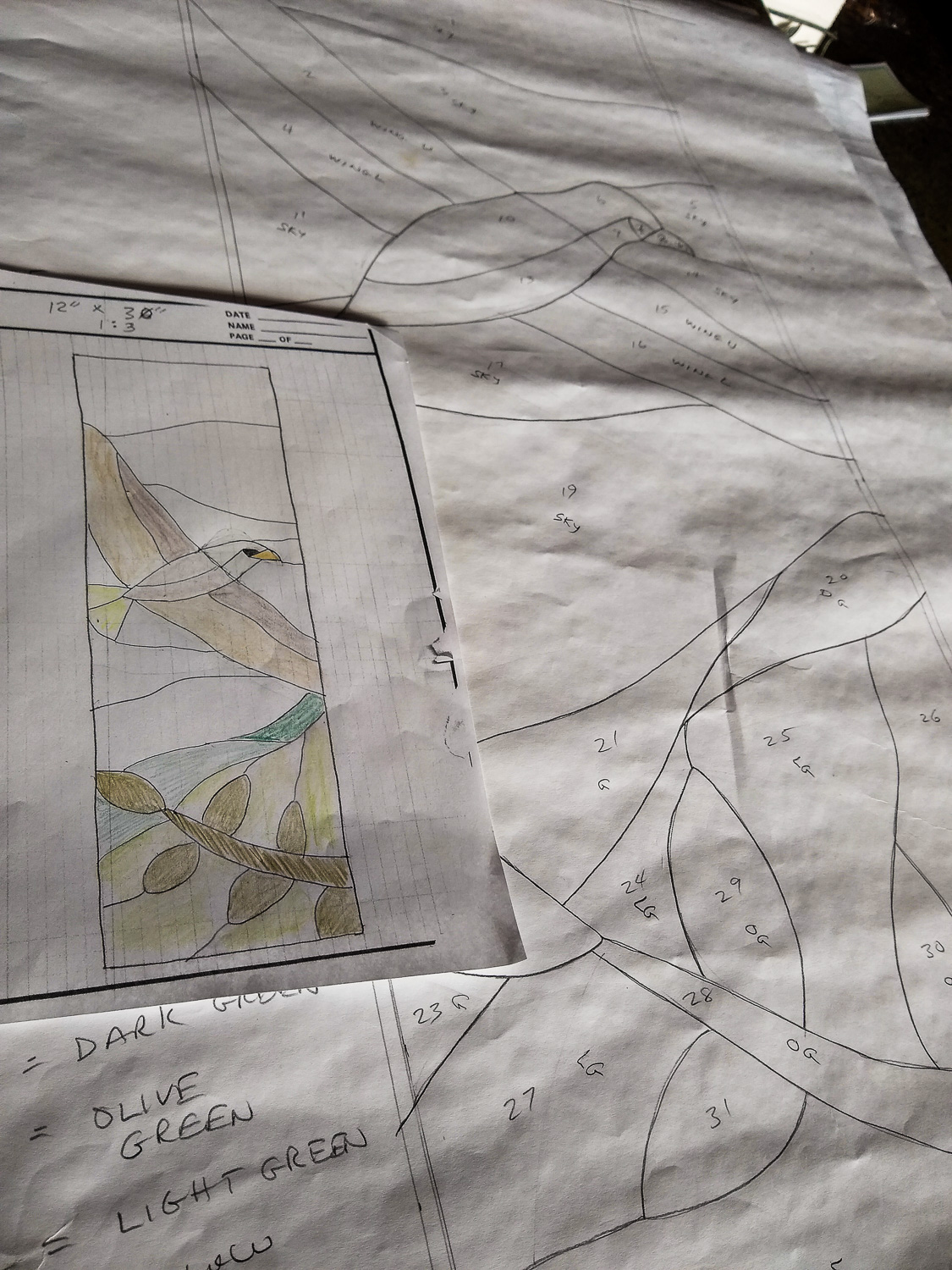
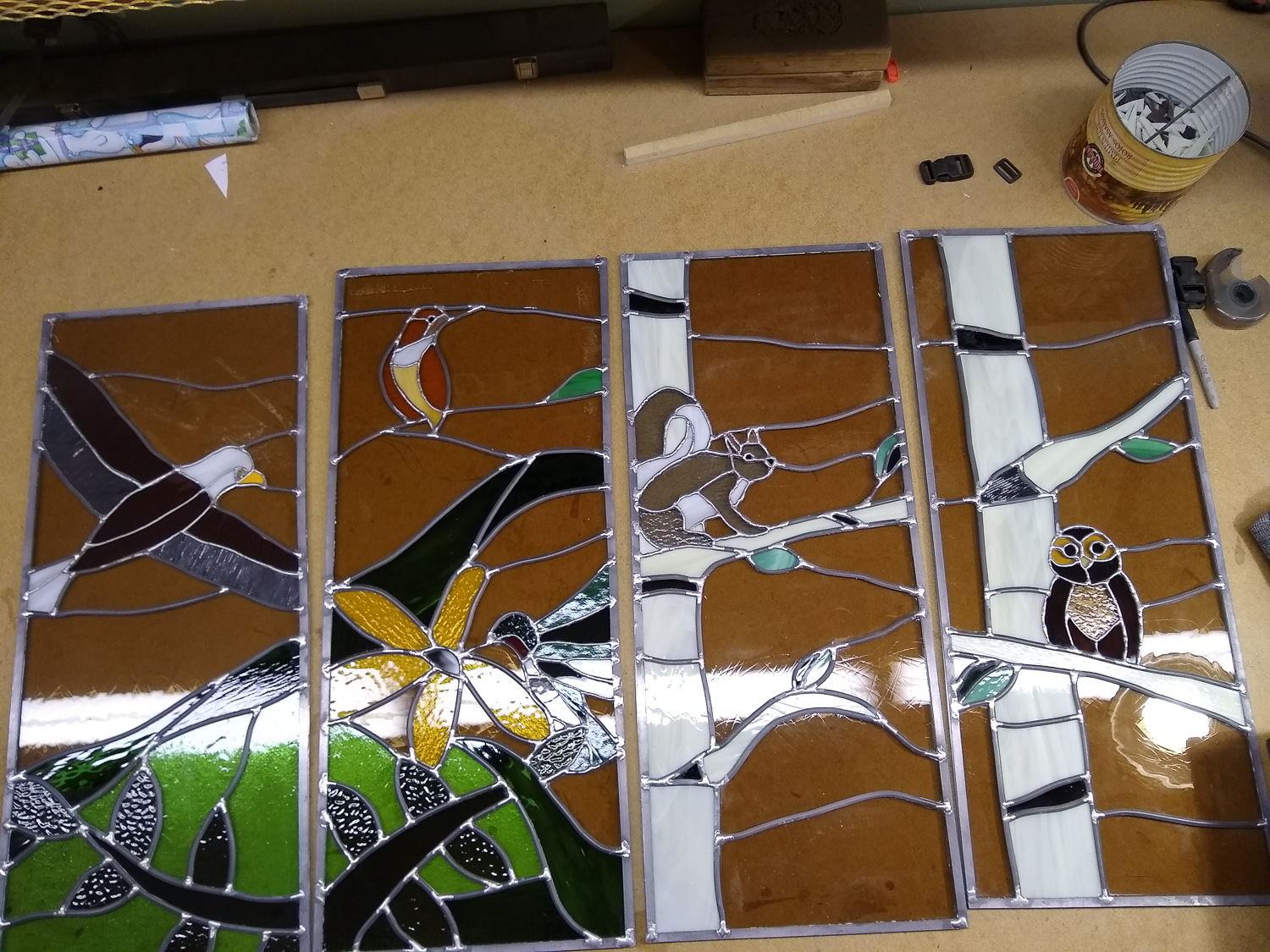 Finished stained glass panels for floor lamp
 Initial back of the napkin concept drawing
 Making pillars for uprights to support stained glass panels
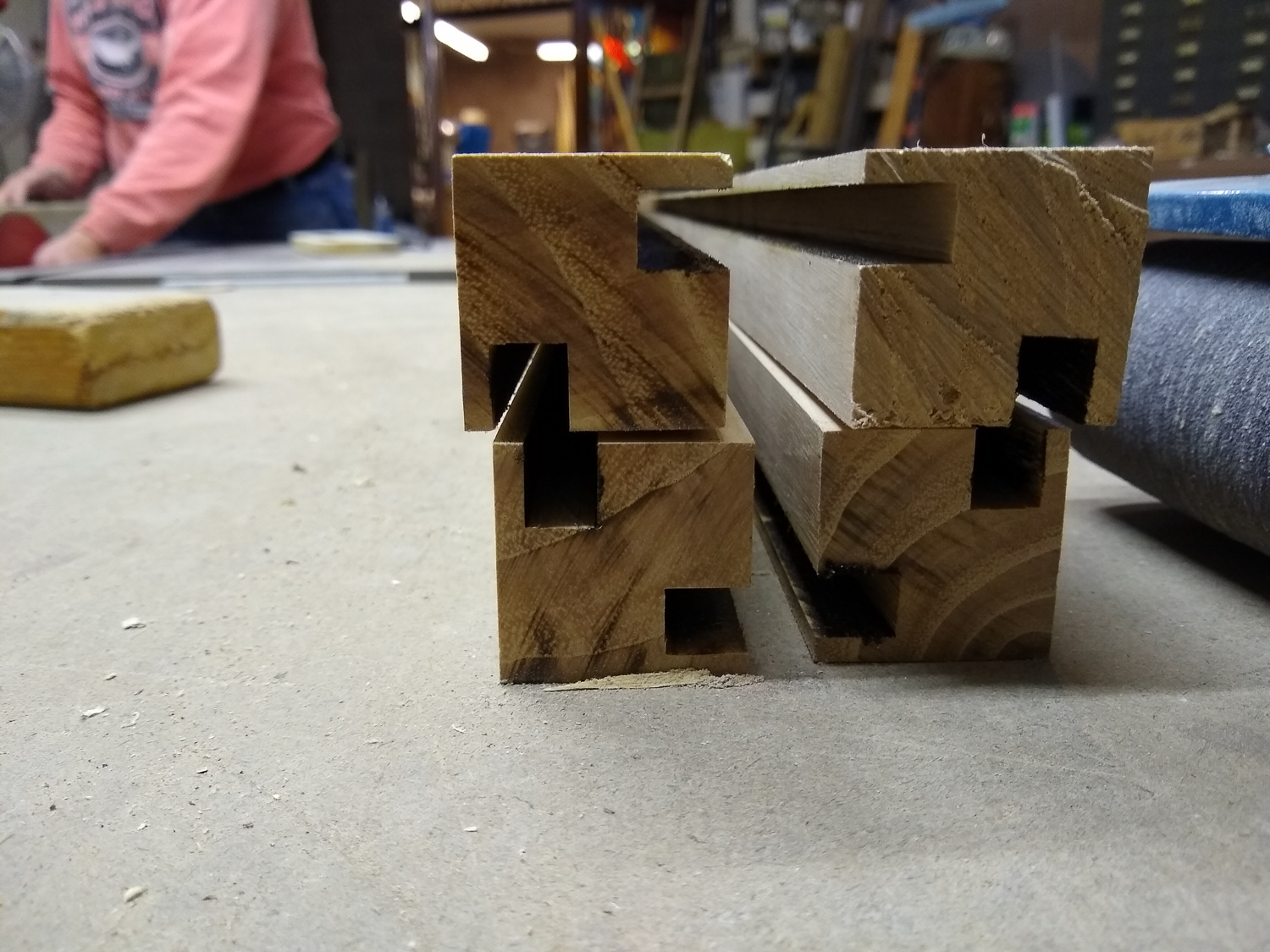 Cut upright pillars
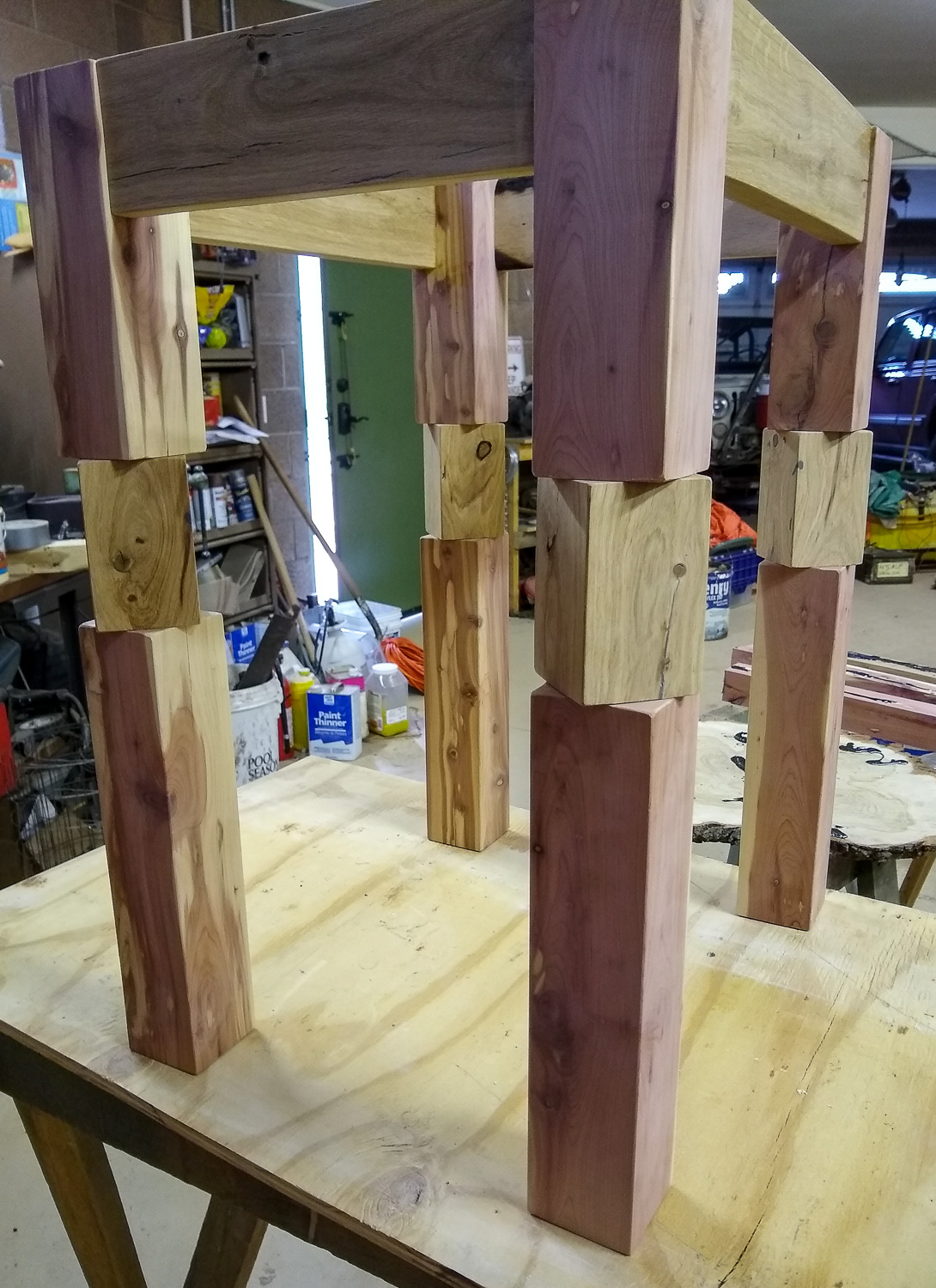
 Trial fit of pillars to stretchers
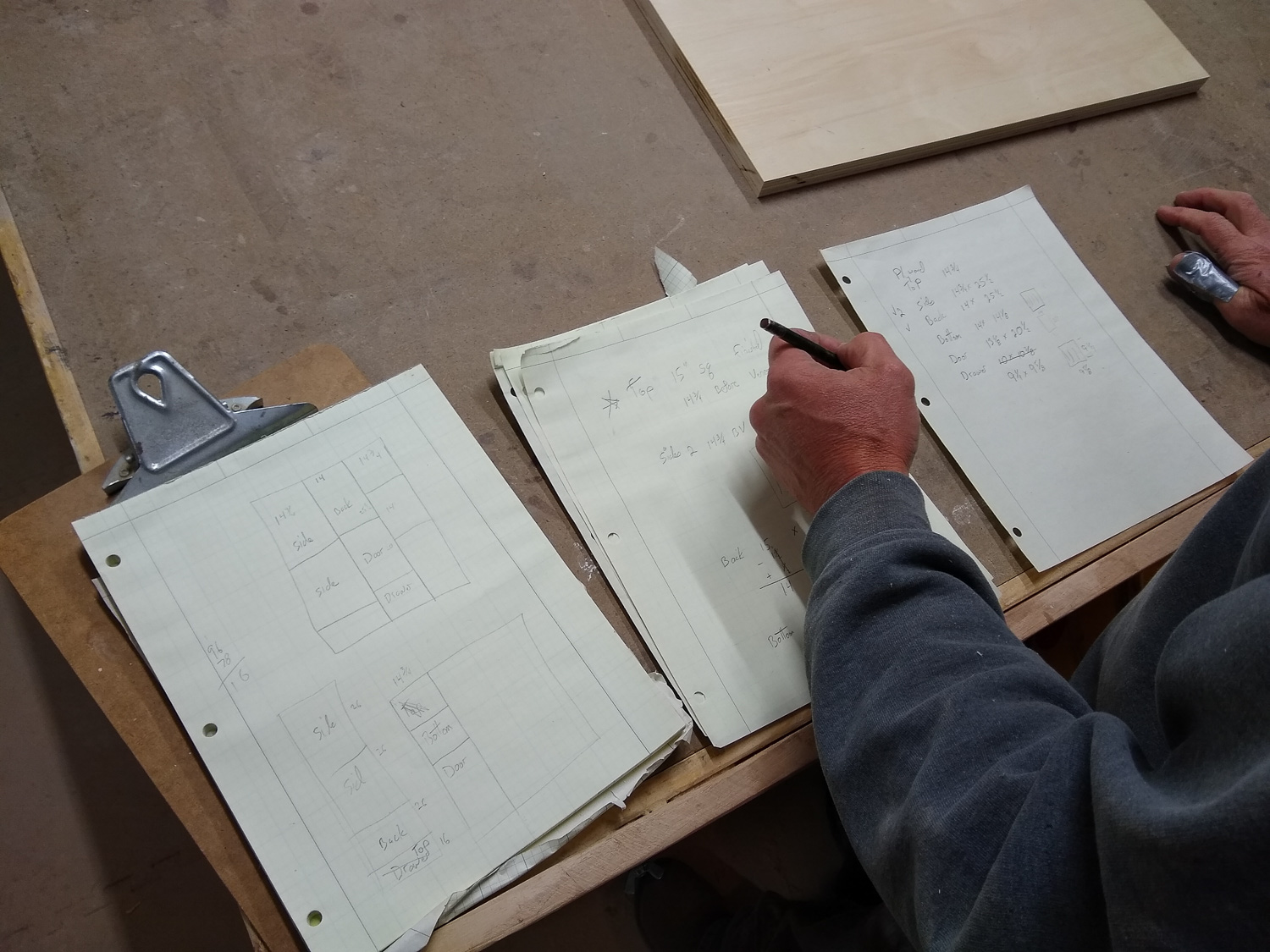 Cutting list
 Glued together top section for glass panels
 Cutting mesquite inlay for shelf
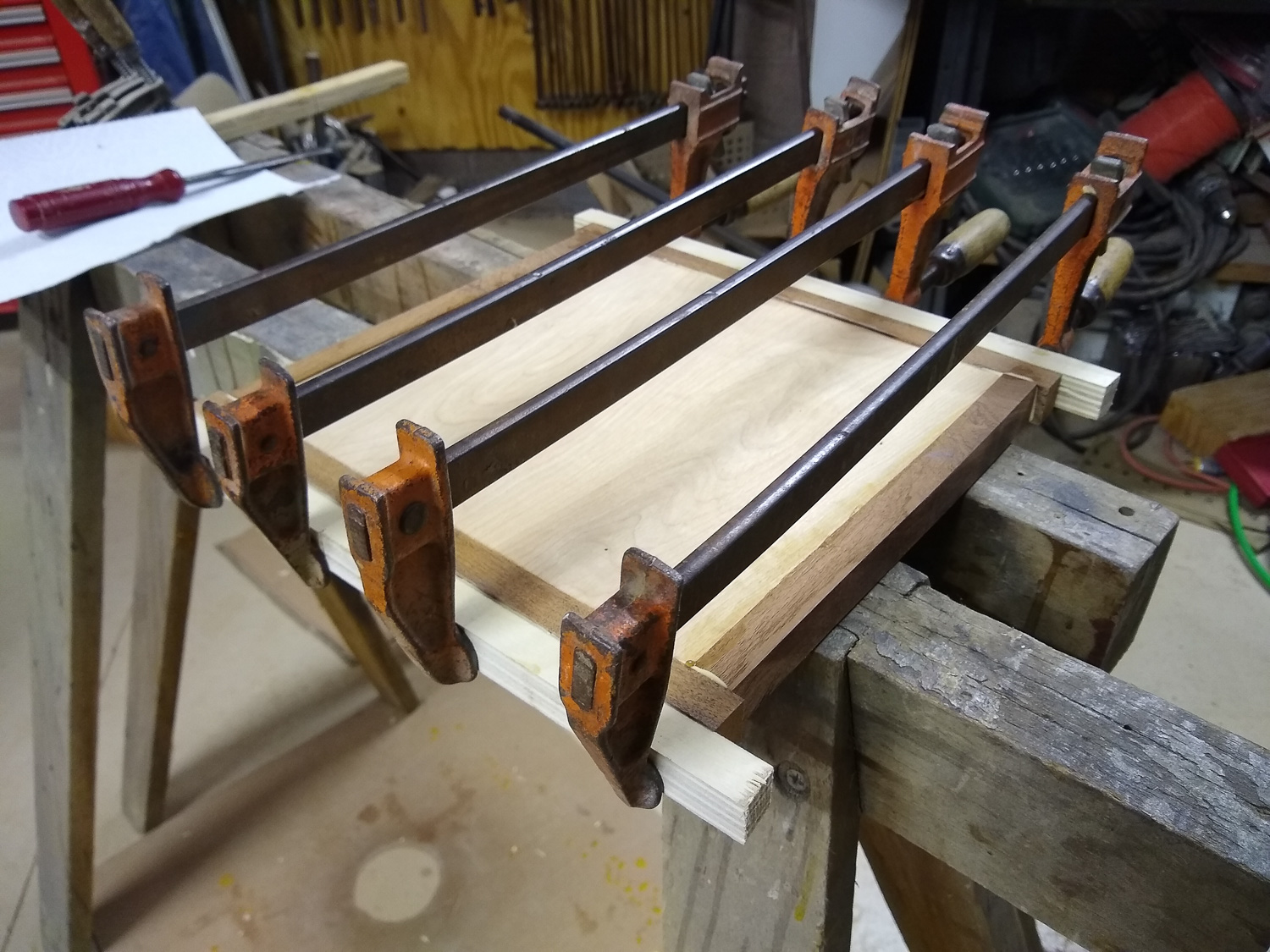 Gluing shelf together
 Making our own baseboard molding from pecan lumber (started as tree cut from our yard)
 Cutting moulding on baseboard
 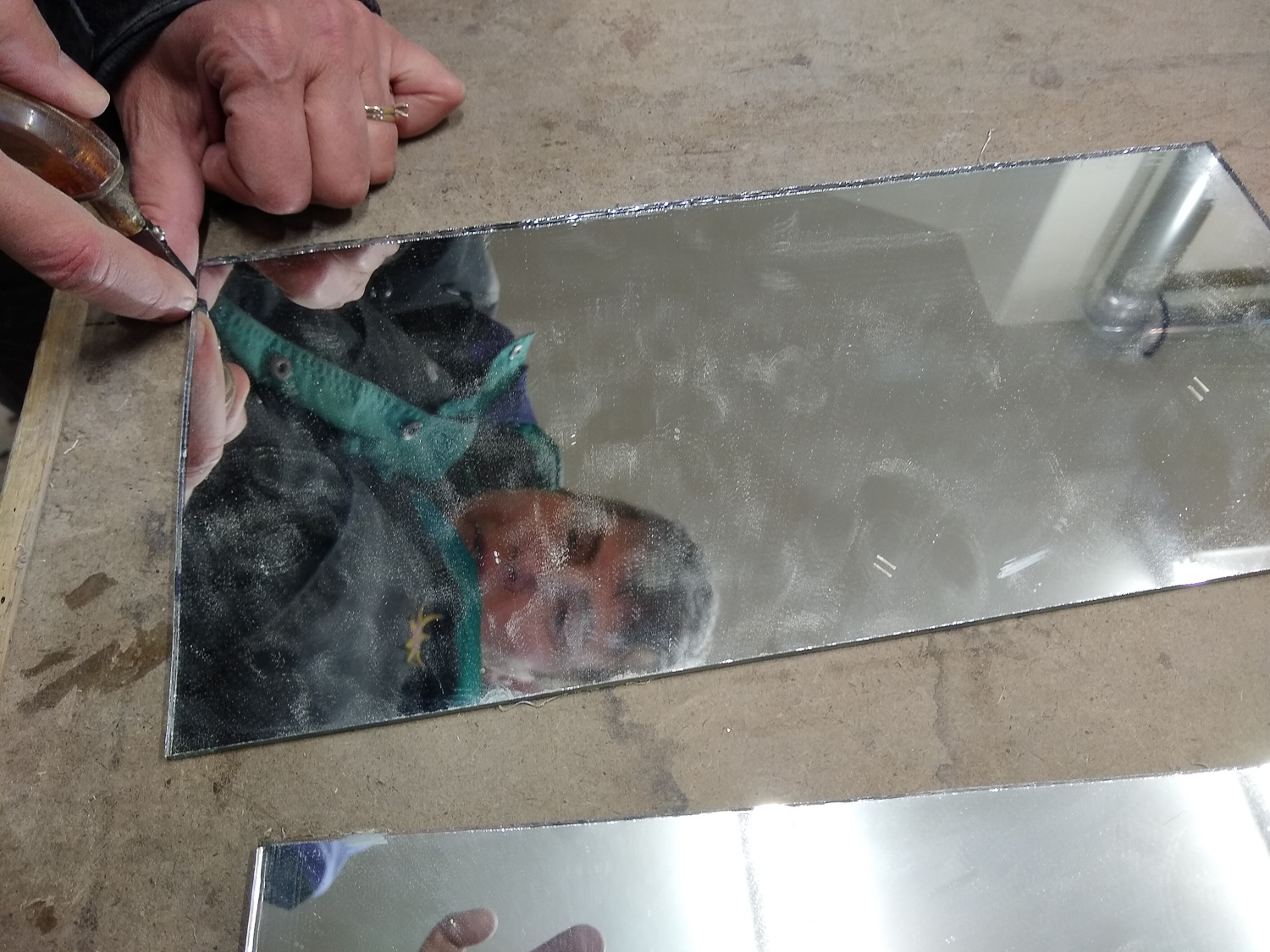 Cutting mirror for light reflection
 Retainer for mirror on top stretchers
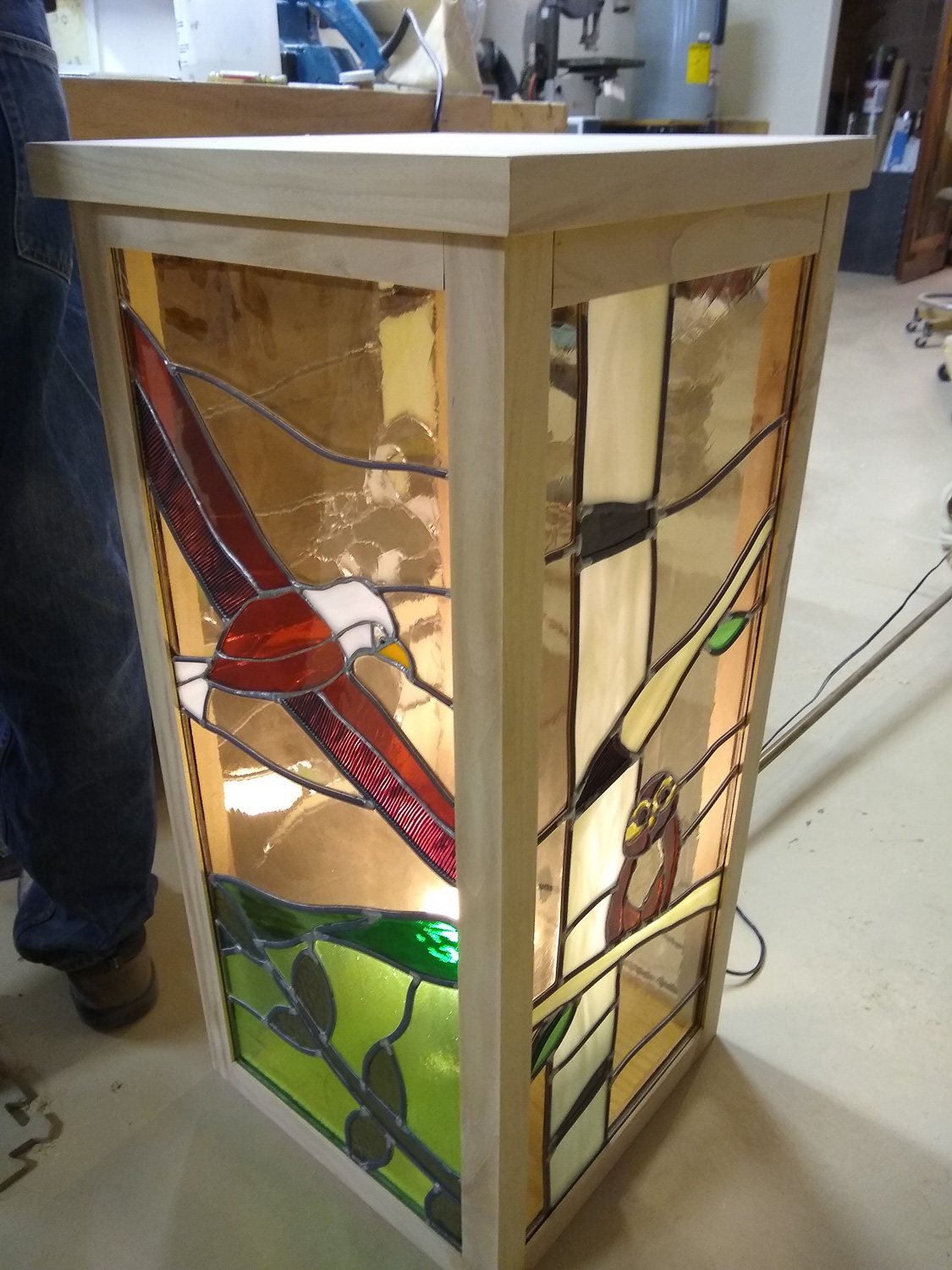 Trial fit of glass panels with light and mirror
 Cutting birch bottom section pieces
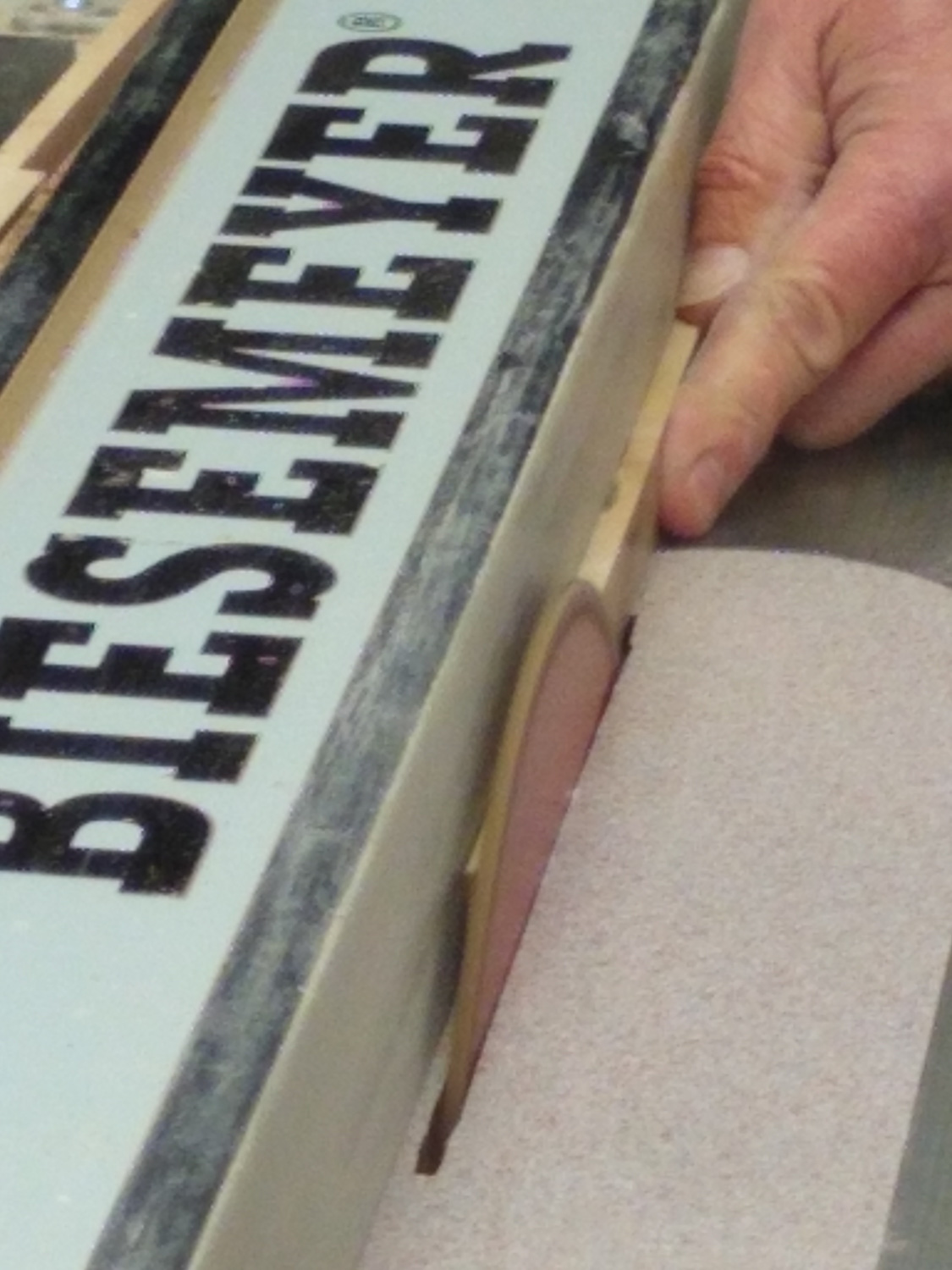 Cutting veneer
 Bits and pieces of bottom section, cut and veneered
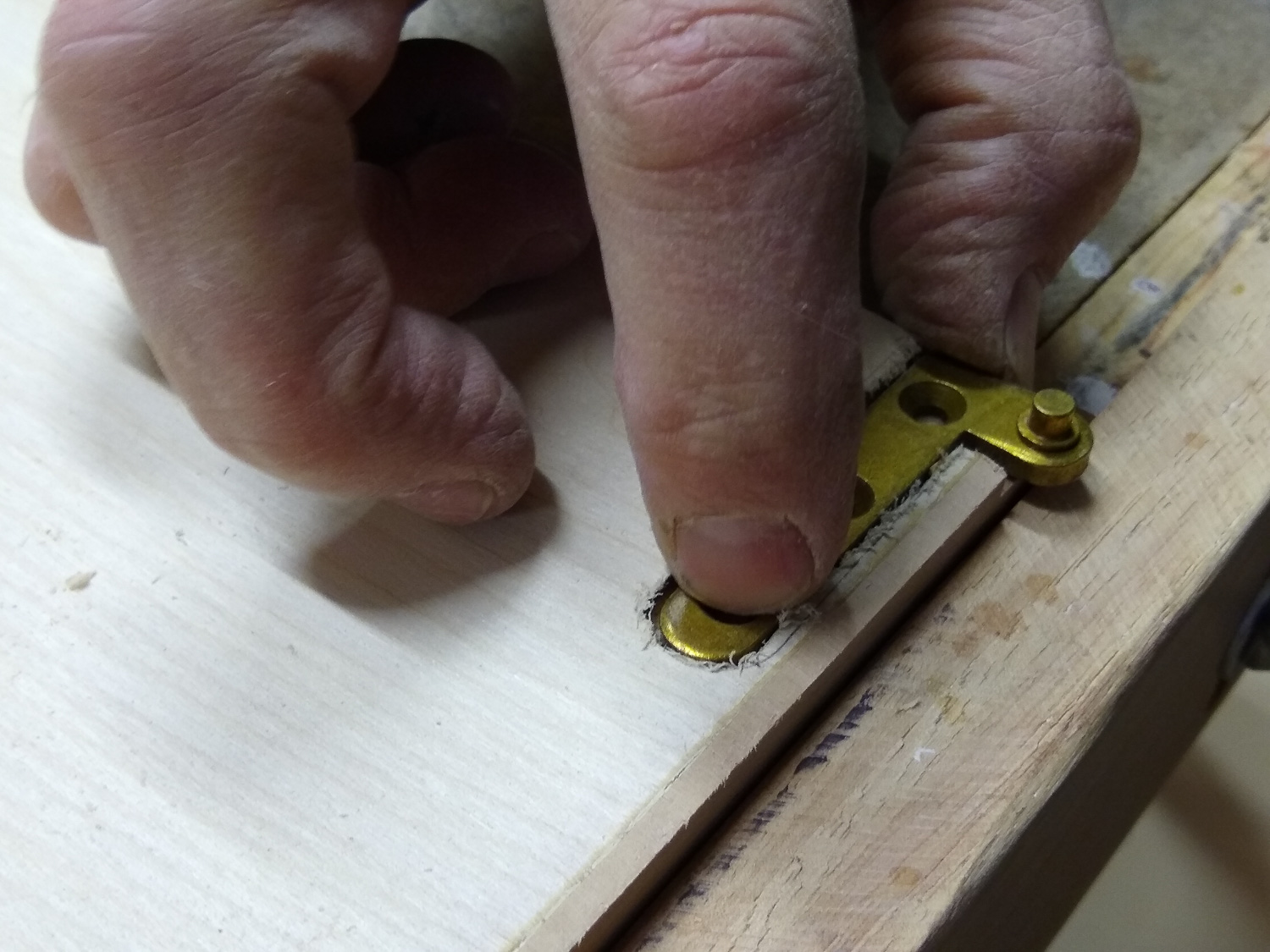 Hinge recessed for door
 Lower section glued and clamped together
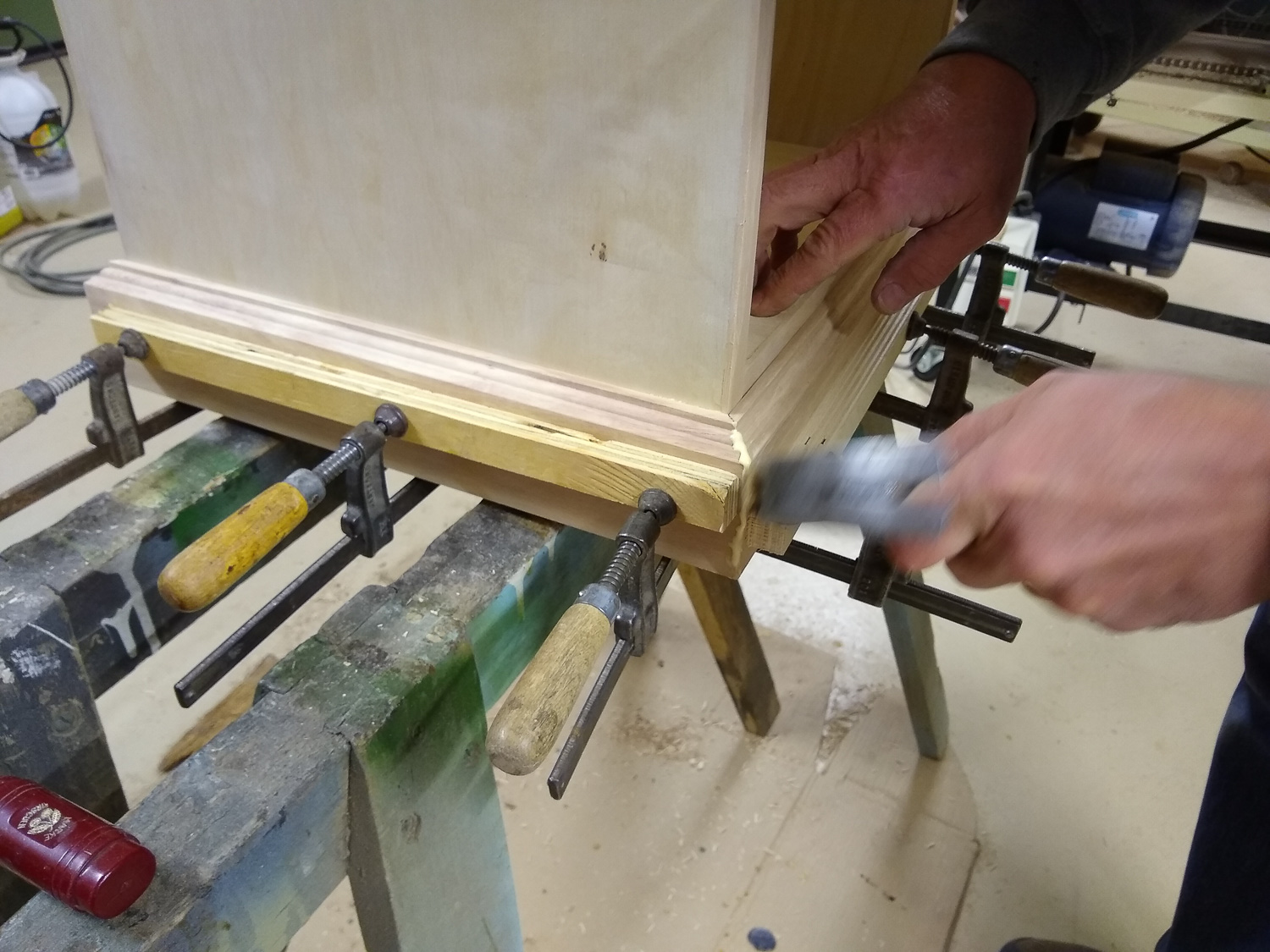 Gluing baseboard moulding
 Staining lower cabinet section
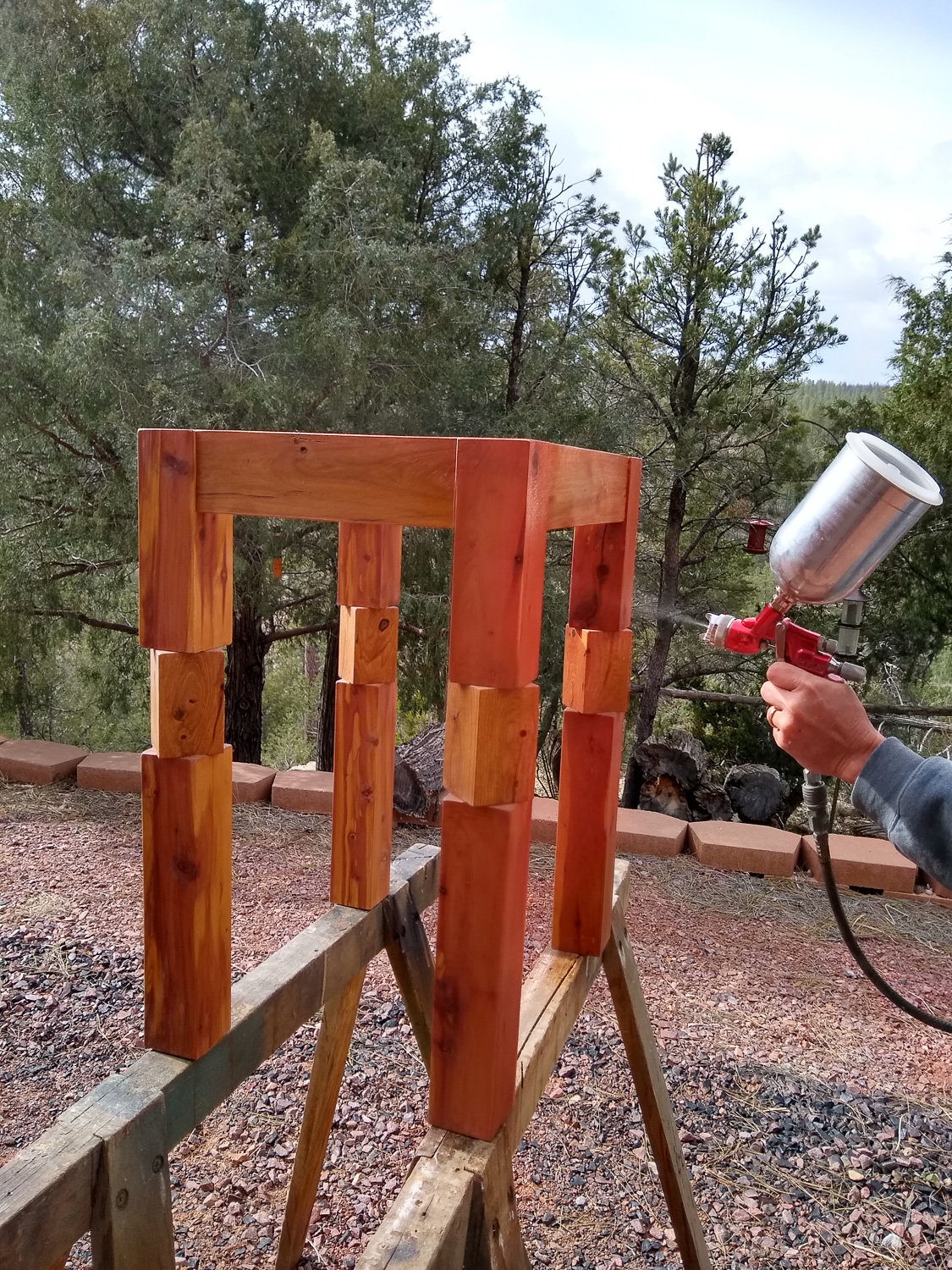
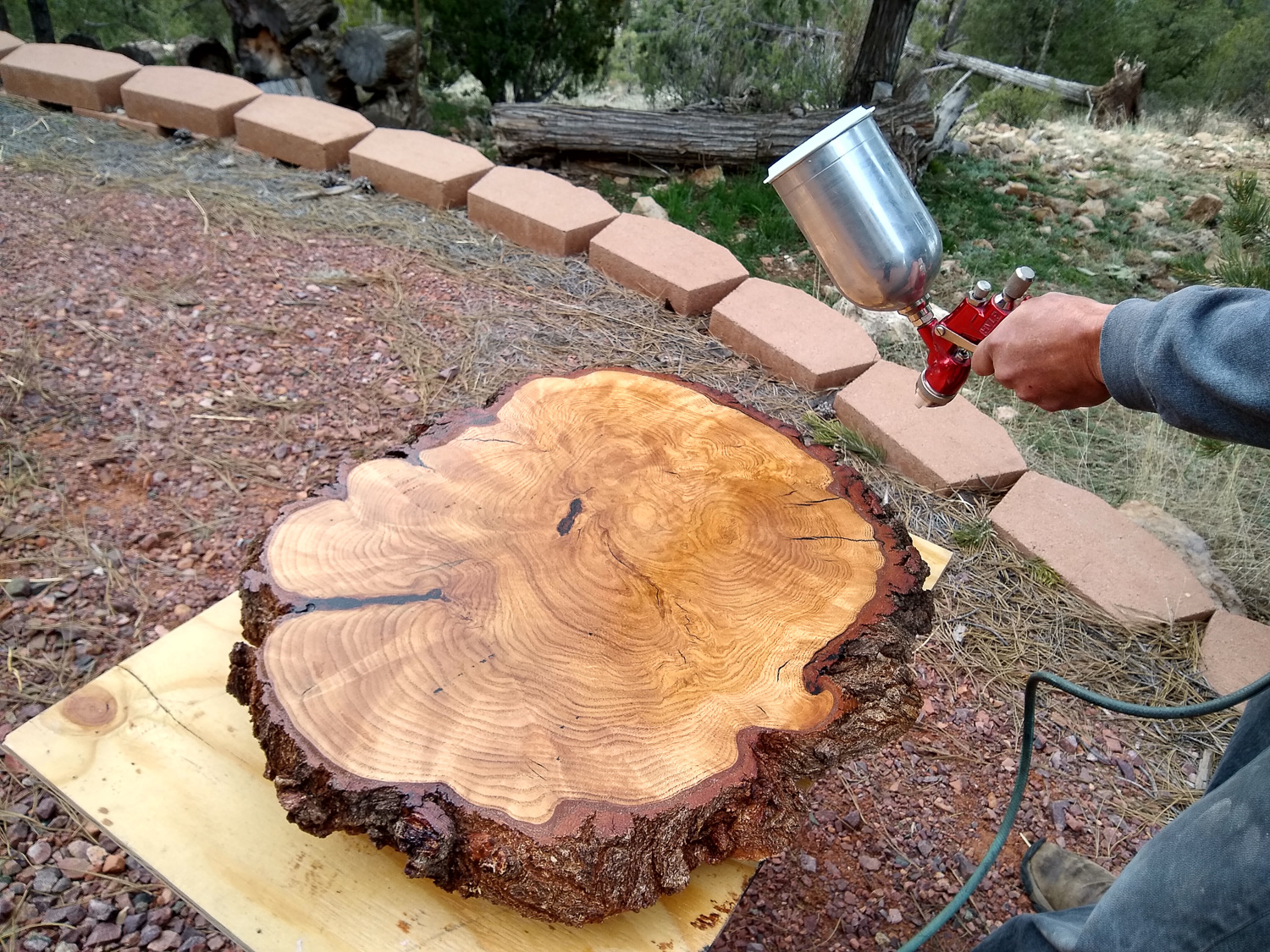
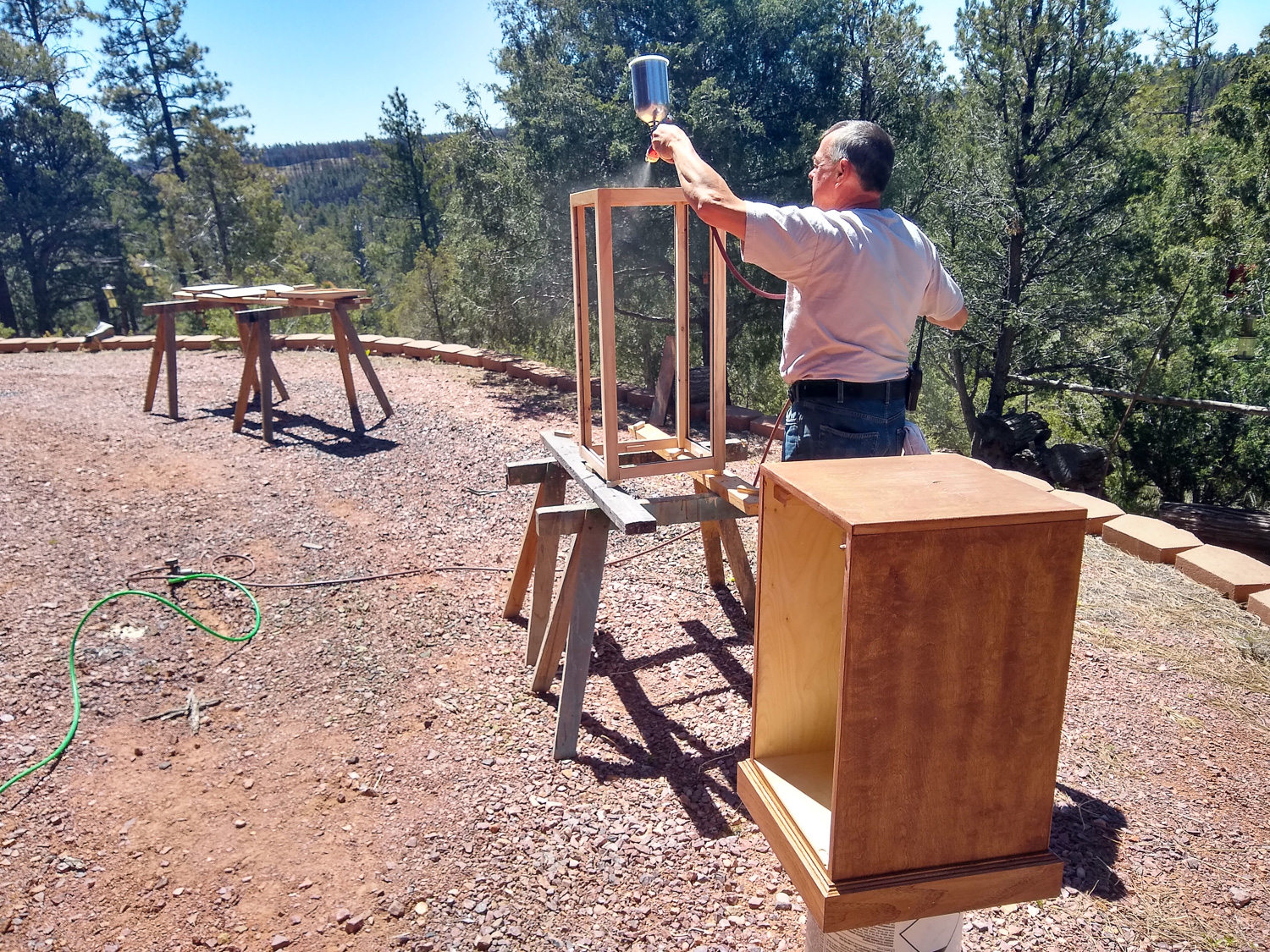 Spray lacquering cabinet top, bottom, and pieces
 Finished lamp with shelf pulled out
 Finished lamp in place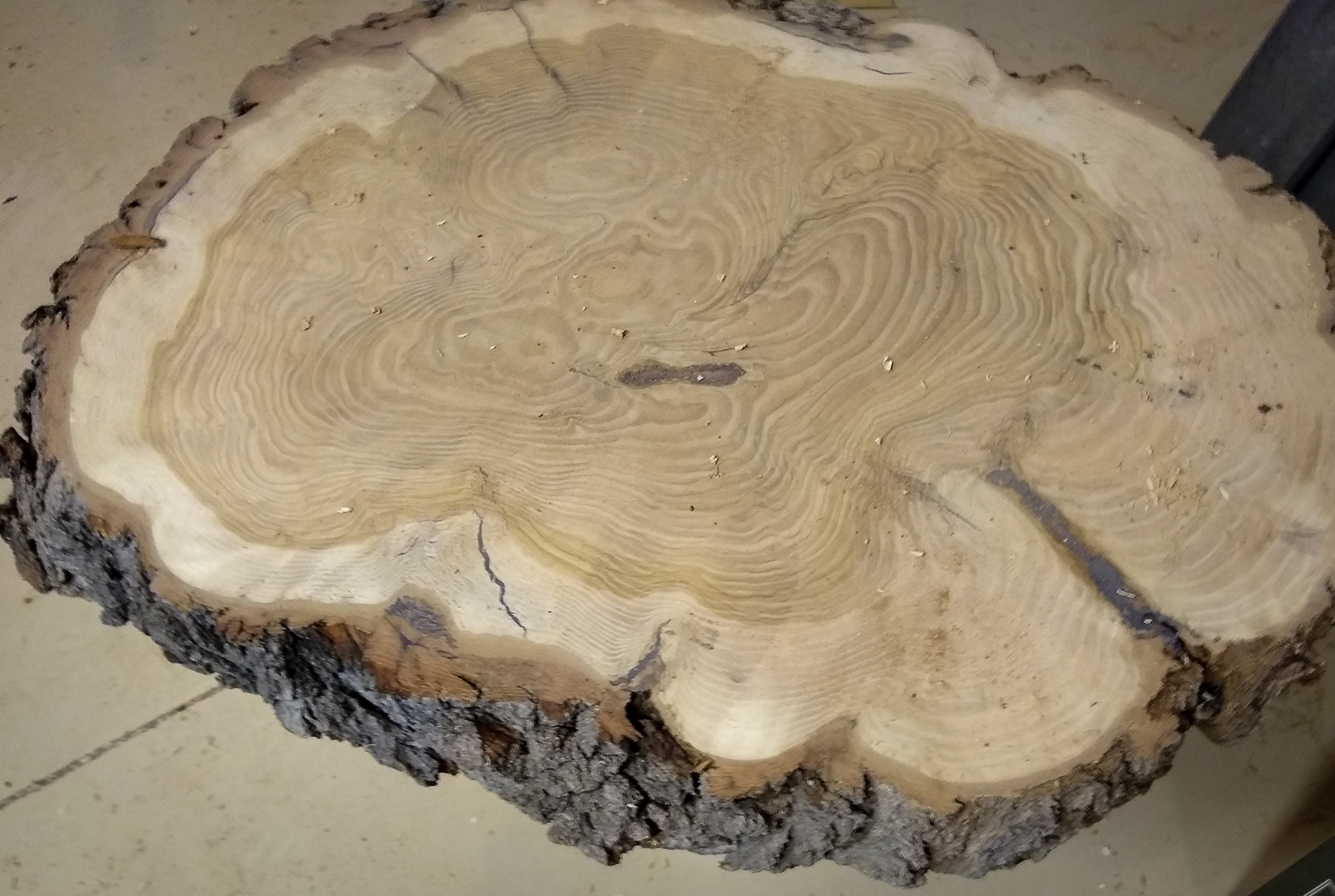
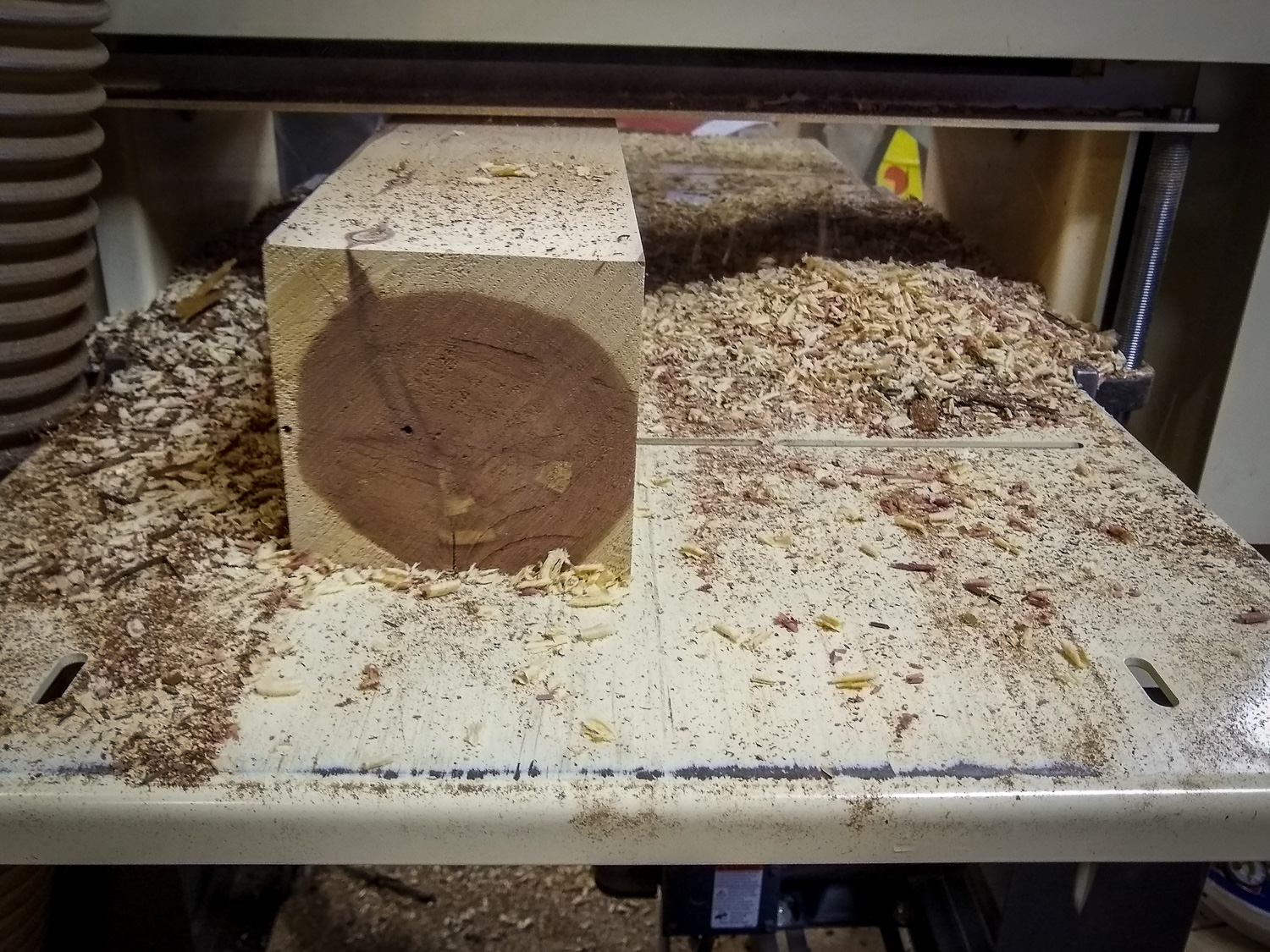
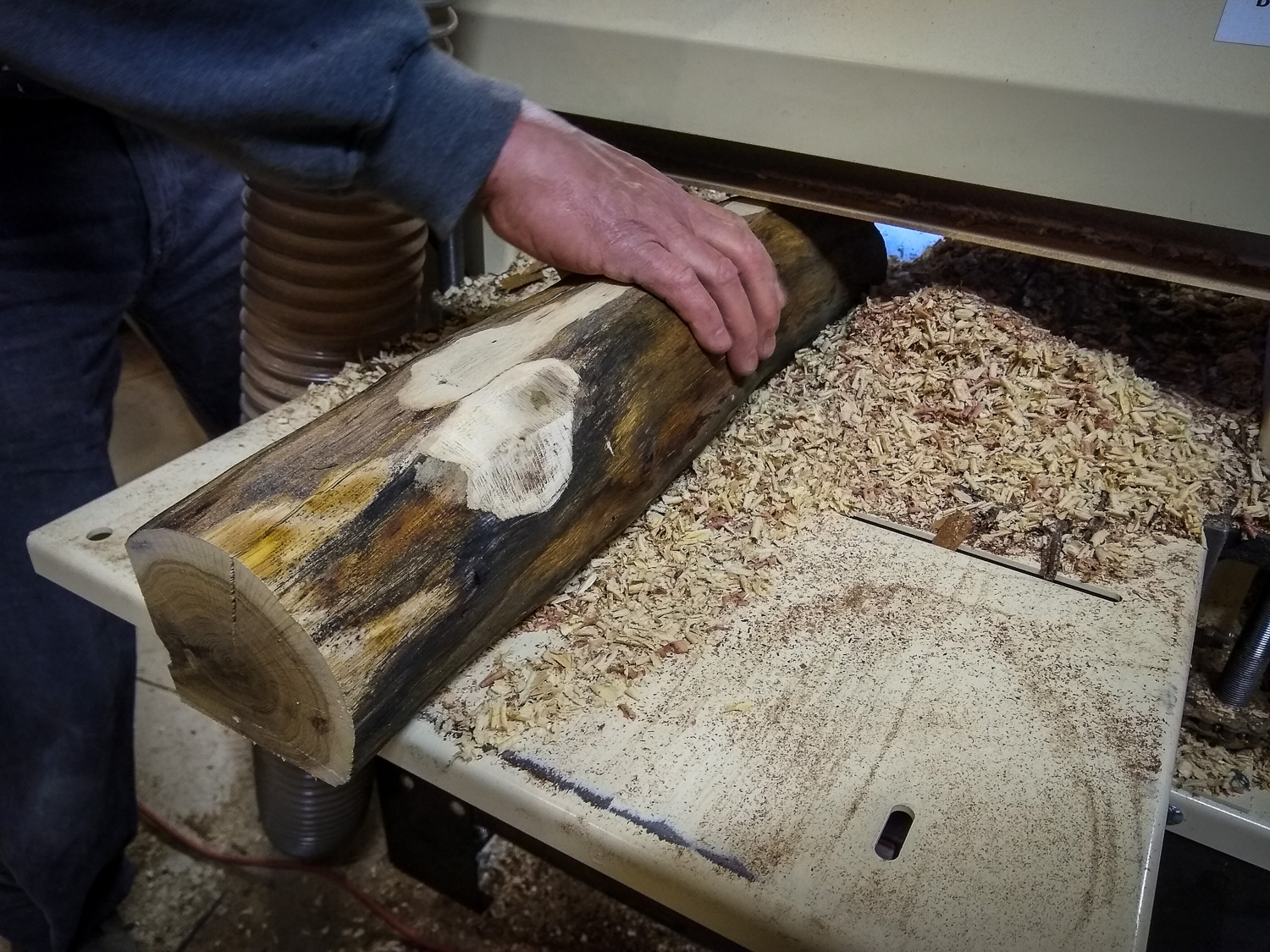
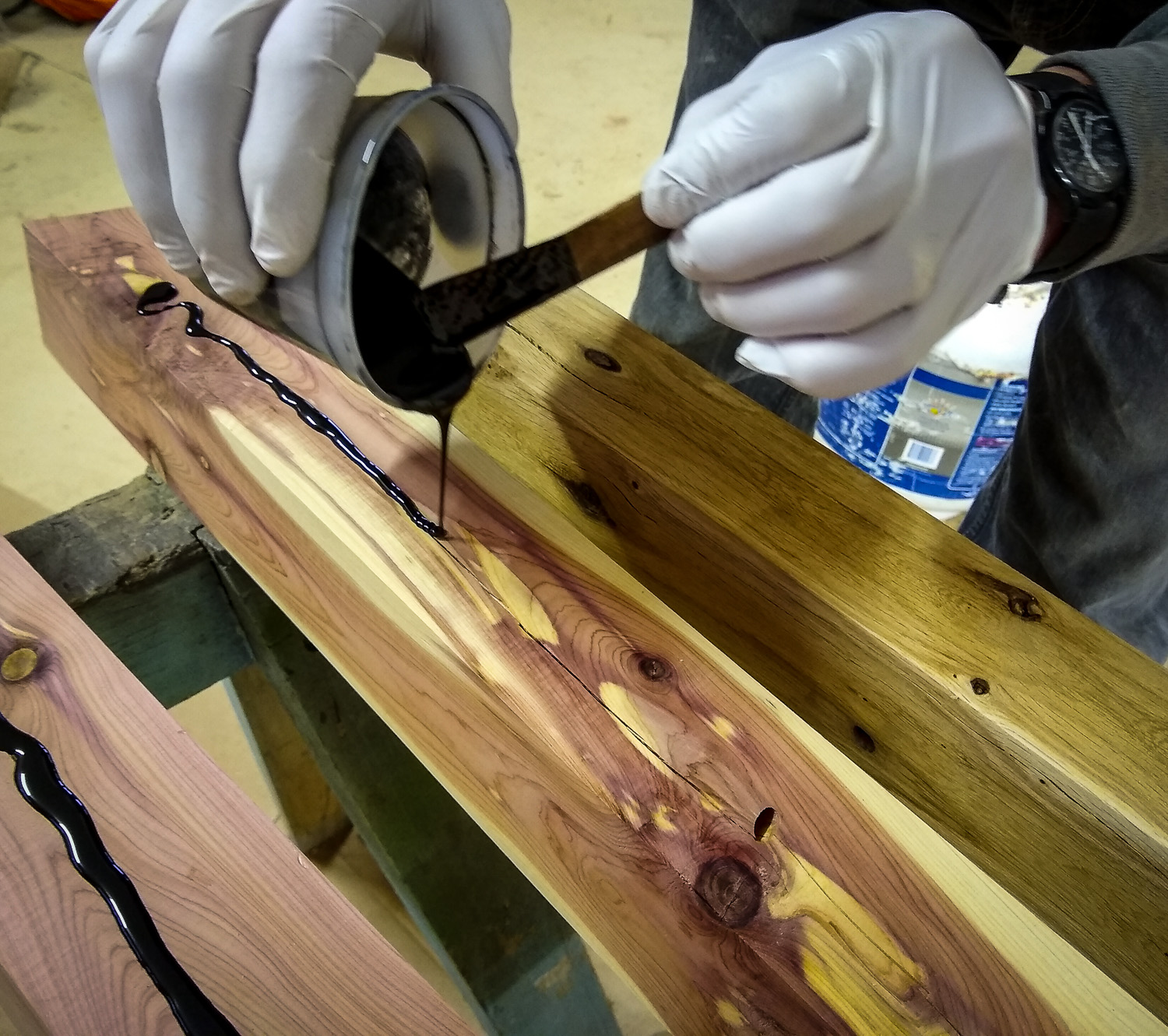
 We decided to use a combination of oak and cedar for an ‘architectural’ highlight. The wood was super dry, almost kiln dried. Using the jointer we cut a flat through the 6″ – 8″ logs to clear the bark and provide a flat datum. The jointer allowed us to make parellel sides.
















 kritterspaw